Snowy and flocked Christmas trees: a buying guide
This guide covers only what is different about snowy, frosted and flocked trees. For the general decisions that apply to any artificial tree – height, tip counts, PE versus PVC foliage, stands and assembly – see our main artificial Christmas trees buying guide.
What the names actually mean
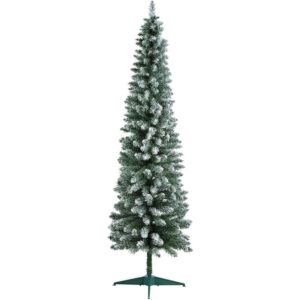
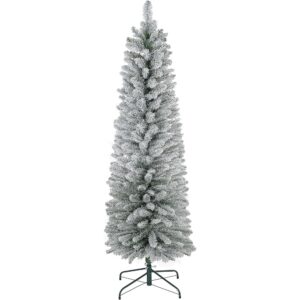
Retailers use "snowy", "frosted", "flocked" and "snow-covered" loosely, and a single listing will often use three of them for the same tree. There is no standard, but the words do tend to point towards a certain amount of coverage, and towards a certain way of applying it.
| Term |
What it usually describes |
Overall look |
| Frosted, snow-dusted, snow-kissed |
A light coating on the outer branch tips only. The green foliage dominates and the snow reads as a dusting. |
Mostly green |
| Snowy, snow-covered |
The general-purpose UK terms, covering anything from light to medium coverage. Snow sits along the upper side of the branches as well as the tips. |
Balanced green and white |
| Flocked, snow-flocked, heavily flocked |
Thick coverage that makes the branches look weighed down. The tree reads as white with green showing through underneath. |
Mostly white |
| Snow-tipped, white-tipped, snow-dipped |
The tips themselves are white – either white PVC or painted – rather than coated with a snow material. Flatter and less textured, but nothing to shed. |
Green with white points |
| Glitter frosted, iced |
Glitter on the tips, sometimes with a little flocking underneath. Sparkles under lights; the glitter sheds just as flocking does. |
Green with sparkle |
Because the wording is unreliable, judge a tree by its photographs rather than its title. Zoom in on the branch tips and look at the ratio of green to white, and look for customer photographs, which are taken in ordinary rooms under ordinary light. A plain white Christmas tree, with all-white foliage, is a different product altogether and is not covered here.
How the snow is applied matters more than what it is called
Two trees described identically as "snow-flocked" can behave very differently once they are in your living room. The difference is in how the white was put on, and it is the single best predictor of how much mess you will have.
- Sprayed flocking. Finely ground cellulose (paper fibre) mixed with an adhesive and misted onto the branches, settling mostly on their upper surfaces as real snow would. It is soft and matte, and it is the method used on the better trees. It sheds loose powder when first unpacked and fluffed, then settles down considerably. Over the years it thins gradually and fairly evenly.
- Glued granules. Small white granules or foam particles stuck to the tips, common on budget trees. It can look crusty or like polystyrene up close, and it coats every side of the tip rather than sitting on top. It tends to come off in pieces rather than as dust, and keeps doing so through the season.
- White tips. White PVC or paint, so there is no coating to lose. Painted tips can flake; white PVC cannot. This is the option if you want a hint of snow and absolutely no mess, and you are willing to accept a flatter, more two-dimensional effect.
Listings rarely say which method has been used, but there are clues. "Snow-dipped" or "painted" tips means paint. Photographs showing snow resting on the top of each branch suggest spraying; evenly coated, granular-looking tips suggest glued particles. Most useful of all, read the reviews and search within them for "snow", "mess" or "comes off": owners of trees that shed badly always say so.
How much snow do you want?
Coverage decides how you will decorate the tree, how much it will shed and how much storage space it needs, so decide this before you look at anything else.
- Light (frosted). The best choice if you have a box of colourful family decorations you want to see, because the green background still does its job. Least shedding, lightest to carry, easiest to store, and it ages gracefully because any flocking that is lost disappears evenly rather than in patches.
- Medium (snowy). Reads as a tree that has been out in a snowfall. Works with most decorating schemes and is what most people picture when they think of a snowy artificial Christmas tree.
- Heavy (flocked). A statement tree that looks best with very few decorations, since the snow is the point. Expect more shedding, more weight, and sections that will not compress back to the size of the box they arrived in. Any yellowing or patchiness later in life also shows more on a heavily flocked tree.
One point that is rarely made: heavy flocking hides the detail of the foliage underneath it. Moulded PE needles are the main reason to pay more for an artificial tree, and under a thick coat of snow much of that realism is lost, so a well-made PVC tree can look just as good once heavily flocked. The reverse applies to frosted trees, where the green foliage is still on show and PE tips earn their money. The same goes for pre-attached pinecones, which tend to disappear under heavy flocking and only really register on a lightly frosted tree.
Pre-lit snowy trees
Pre-lit is a convenience on a green tree. On a flocked tree it is closer to a necessity. Wrapping your own lights around flocked branches knocks the snow off as you go, and unwinding them in January does it again, so a pre-lit flocked Christmas tree keeps its coating noticeably longer than an unlit one you dress yourself. If you do buy unlit, use lights on a thin wire, lay them along the branches rather than wrapping tightly, and consider leaving them on the tree in storage.
Flocking also changes how the lights look. The snow diffuses each LED into a soft glow rather than a point of light, which is why pre-lit snowy trees often look brighter and more evenly lit than a green tree with the same number of bulbs. Use the retailer's lit photographs rather than the LED count to judge the effect.
Colour temperature matters more than it does on a green tree, because the white backdrop shows it up:
- Warm white is the popular choice. It gives the snow a cosy, slightly creamy glow and stops the tree looking cold. On a very heavily flocked tree, some warm whites can read as yellowish against the pure white, so check lit photographs.
- Cool or ice white leans into the frozen look and suits grey, silver and glass schemes. It can feel stark in a traditionally furnished room.
- Multicolour and colour-changing lights show up far more strongly against white than against green. Many colour-changing trees let you switch between warm white, cool white and colours, which is a sensible hedge if you are undecided.
Two practical points from people who have put these trees up: the connectors that join the light sections together are easy to lose in flocked foliage, so find and connect them before you fluff each section rather than hunting afterwards; and on many trees the control for the light settings is on the plug or a foot switch, so position the tree where that will be reachable.
Shedding: what is normal and how to keep it manageable
Every coated tree sheds. What is normal is a small snowfall of loose powder when the sections first come out of the box and are fluffed, tapering off quickly once the tree is up, with the odd white speck during the season and a little more each year. What is not normal is snow that keeps falling whenever anyone walks past, pieces coming away in lumps, or bald patches after a single Christmas.
- Assemble the tree on an old sheet or on the tree skirt you intend to use, then take the sheet outside and shake it. Do not fluff it on a freshly cleaned dark floor.
- Wear thin cotton gloves. Flocking transfers to hands and to dark clothing, and it clings to knitwear in particular.
- Handle the tips gently when fluffing and decorating. Most seasonal loss comes from friction, not from the tree standing still.
- Vacuum the floor around the tree freely, but keep the vacuum off the branches themselves; the suction pulls flocking away.
- A white or cream tree skirt, or a snow blanket, hides fallen flocking. A dark skirt shows every speck.
- The fine dust lingers in the air while you are fluffing. If anyone in the house has asthma or is sensitive to dust, open a window while you set up, or choose a lightly frosted or snow-tipped tree.
Flocking on a bought tree is generally non-toxic once dry, but it is not meant to be eaten. Pets that chew or lick branches can swallow enough to upset their stomachs or, in quantity, cause a blockage. If you have a cat or dog that treats the tree as a toy, a snow-tipped tree with no coating is the safer choice.
Decorating a snowy tree
- The heavier the flocking, the fewer decorations the tree needs. Treat the snow as a decoration in its own right and leave plenty of it visible.
- Deep reds, bottle green, navy, copper and gold stand out against white. Natural textures – wooden ornaments, pinecones, berries, hessian ribbon – suit a snowy tree especially well.
- Plain white and silver baubles can disappear on a heavily flocked tree. Clear or mirrored glass gives the sparkle without vanishing into the snow.
- Flocked tips are slightly thicker and slipperier than bare ones, and baubles on open hooks slide off more easily. Bend hooks closed, or hang decorations on ribbon loops. Hang things once and leave them, since every rearrangement costs a little snow.
Pre-decorated and tabletop snowy trees
Small snowy trees with pinecones, berries, bells or baubles already attached are a quick way to dress a hallway table, mantelpiece or windowsill. Because they are rarely fluffed or re-dressed, shedding matters less than it does on a full-size tree. Check whether the lights are battery or mains powered, what batteries are needed and whether there is a timer. Many come in a hessian sack, pot or wooden base, so check the overall height including the base rather than the tree alone.
Where to put it
Snowy and flocked trees are indoor trees unless the listing explicitly says otherwise. Moisture softens the adhesive, clumps the flocking and encourages mould, so avoid porches, conservatories and any room that gets condensation. Kitchen steam and cooking grease gradually turn white flocking grey, and years of direct sun through a south-facing window will slowly yellow it. None of this rules out a bay window for a few weeks each December; it is a warning about where the tree lives for the other eleven months.
Cleaning and storage
Never wash a flocked tree, with or without lights. Dust it with a hairdryer on its cool setting held well back from the branches, or with a soft paintbrush, working from the top down. Do not wipe the branches with a cloth.
Storage is where flocked trees are most often ruined. Crushing the sections back into the original carton crumbles the coating and leaves flat patches that do not recover, and a season in a damp garage can turn a white tree grey and spotted. Buy a tree storage bag a size up from the one recommended for a green tree of the same height, close the branches gently rather than compressing them, lay the sections in the bag without stacking anything on top, and store it somewhere dry and reasonably cool. If the loft is the only option, make sure the tree is completely dry when it goes in, seal the bag against condensation and add a couple of silica gel sachets. Flocked trees are also heavier than their green equivalents, so a 7ft flocked tree is a two-person job to get up a loft ladder.
Small thin patches can be touched up with a can of snow spray, though the colour and texture rarely match exactly, so test on the back of the tree first and keep spray away from the lights and wiring.
Before you buy
- Decide on coverage first: frosted, snowy or fully flocked.
- Check the photographs, not the title, for how much white there really is and how it has been applied.
- Read reviews for mentions of shedding and mess.
- Choose pre-lit if you want anything more than a light frosting, and pick the light colour deliberately.
- Allow for extra weight and a larger storage bag than a green tree of the same size.
- Make sure you have a dry place to keep it for the rest of the year.
FAQs
What is the difference between a flocked and a frosted Christmas tree? Mainly the amount of snow. A frosted Christmas tree has a light dusting on the branch tips, so the tree still reads as green. A flocked Christmas tree has a thick coating that makes the branches look weighed down, so the tree reads as mostly white. "Snowy" and "snow-covered" sit in between and are used loosely for both. Because retailers do not use the words consistently, always judge by the photographs rather than the name.
Do flocked Christmas trees make a mess? Yes, to some degree. Expect a fall of loose white powder when you first unpack and fluff the tree, then much less once it is standing, with a few specks during the season and a little more each year. Set the tree up on a sheet, wear gloves, handle the tips gently and keep the vacuum off the branches. Continuous shedding or lumps coming away suggests a poorly applied coating rather than normal behaviour.
Which is less messy: a snowy tree or a snow-tipped tree? Snow-tipped (or white-tipped) trees have white PVC or painted tips rather than a snow coating, so there is nothing to shed. They are the right choice if you cannot tolerate any mess, or if you have a pet that chews the tree, but the effect is flatter and less realistic than sprayed flocking.
Are flocked Christmas trees safe for pets and children? The flocking on a shop-bought tree is generally non-toxic once dry, but it is not meant to be swallowed. A pet that chews or licks the branches can get an upset stomach and, in larger quantities, a blockage. Keep curious pets and toddlers away from the lower branches, vacuum fallen flocking promptly, and if your cat or dog treats trees as toys, choose a snow-tipped tree without a coating.
Can you put a snowy or flocked Christmas tree outside? Not unless the listing specifically says it is suitable for outdoor use, and even then only under cover. Rain and damp soften the adhesive, clump the flocking and encourage mould. Porches, conservatories and other spaces prone to condensation are also unsuitable.
What colour lights look best on a snowy Christmas tree? Warm white is the most popular choice and gives the snow a cosy, creamy glow. Cool or ice white emphasises the frozen look and suits silver, grey and glass decorations, though it can feel stark in a traditional room. Multicoloured lights show up far more vividly against white flocking than against green foliage. Flocking diffuses light, so a pre-lit snowy tree usually looks brighter than a green tree with the same number of LEDs.
Should I buy a pre-lit flocked Christmas tree or add my own lights? Pre-lit is strongly recommended for anything more than a light frosting. Wrapping lights around flocked branches knocks the snow off, and unwinding them after Christmas does it again. If you do buy an unlit tree, use lights on a thin wire, lay them along the branches rather than wrapping tightly, and consider leaving them on the tree when you store it.
How do you clean a flocked Christmas tree? Never use water or cleaning products, and do not wipe the branches with a cloth or vacuum them directly. Dust the tree with a hairdryer on its cool setting held well back from the branches, or with a soft paintbrush, working from the top down over a sheet.
How should I store a flocked Christmas tree? In a tree storage bag one size larger than you would use for a green tree of the same height, with the branches closed gently rather than crushed, and nothing stacked on top. Keep it somewhere dry; damp garages and sheds are the most common cause of grey, spotted or mouldy flocking. If the loft is your only option, make sure the tree is completely dry, seal the bag and add silica gel sachets. Avoid forcing it back into the original box, which flattens the coating permanently.
Why has my flocked tree turned yellow? White flocking yellows slowly with age, direct sunlight, heat, cigarette smoke and cooking fumes, and goes grey with dust and damp. Store the tree somewhere dry and dark, keep it out of the kitchen and away from radiators, and avoid leaving it in a sunny window for longer than the season. Yellowing cannot be washed out of a flocked tree; small areas can be disguised with decorations or lightly touched up with snow spray.
Can I flock my own artificial Christmas tree or top up the snow? Small thin patches can be touched up with a can of artificial snow spray. Test on the back of the tree first, as the colour and texture rarely match the original exactly, and keep spray well away from lights and wiring. Fully flocking a plain tree at home is messy, hard to do evenly and will usually void the warranty; a pre-flocked tree gives a far better result.
Do flocked Christmas trees look realistic? A well-made one with sprayed flocking that sits on top of the branches looks very convincing, especially lit. Trees with glued granular snow coating every side of the tip look less natural up close. Note that heavy flocking hides the foliage beneath it, so the realistic moulded PE needles that justify a higher price make little difference on a heavily flocked tree and matter most on lightly frosted ones.
Are flocked trees heavier than normal artificial trees? Yes. The coating adds weight and stops the branches compressing as tightly, so a flocked tree is heavier and bulkier to carry and store than a green tree of the same height. Allow for this if the tree is going up a loft ladder or into a small cupboard.

 A warm welcome from The Artificial Flowers Company. We offer artificial flower arrangements, silk flowers, hanging baskets, topiary balls, topiary plants and much more - we hope you find what you're looking for!