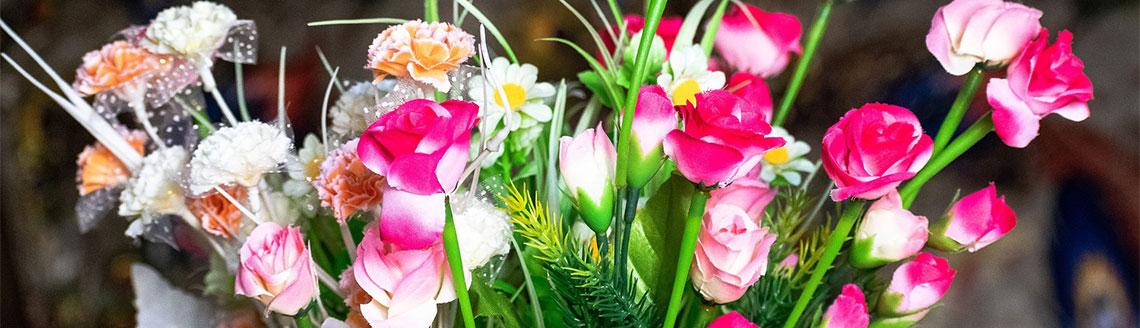
Window boxes are one of the loveliest ways to bring a little greenery and colour to a flat, but when you live on an upper floor they come with their own set of challenges. Watering cans are awkward to lug up several flights of stairs, wind tends to be stronger the higher you go, and reaching outside a second or third-floor window to deadhead a geranium is nobody’s idea of fun. This is where faux window boxes really come into their own.
Artificial flowers and foliage let you enjoy a cheerful, full display all year round, with no watering, no mess and no precarious balancing acts. In this guide we’ll look at how to put together a faux window box that suits upper-floor living, from keeping things lightweight and secure to choosing blooms that still look wonderful when viewed from the pavement below.
Why faux window boxes suit upper-floor flats so well
Living higher up brings particular practical problems for live planting. Faux displays sidestep almost all of them.
- No watering or feeding. You won’t need to haul water upstairs or worry about drips landing on a neighbour below.
- No wilting in summer heat or scorching sun. Upper floors often catch more direct light, which can stress live plants quickly.
- Year-round colour. Your box looks just as good in January as it does in June, with no awkward bare patches between seasons.
- Low risk and low fuss. No soil to spill, no dead leaves to clear and nothing to attract insects right outside your window.
For anyone managing a flat where reaching the window ledge from outside is impossible, artificial arrangements are a genuinely sensible choice rather than simply a shortcut.
Keep it lightweight from the start
Weight matters more on an upper floor than it does at ground level. A heavy box is harder to manoeuvre into position, more difficult to fix securely, and potentially dangerous if a fixing ever failed. The good news is that a faux display can be much lighter than the real thing because you’re not using wet compost.
Choose a trough made from high-grade plastic or a lightweight composite rather than heavy stone, terracotta or solid metal. Modern plastic troughs are durable and easy to handle, and many are designed to look like more expensive materials from a distance.
Inside the box, you have a small balancing act to manage. You want it light enough to handle safely, but with enough weight low down to stop it being tossed about by the wind.
Anchoring without overloading the box
A common method for faux window boxes is to add a little ballast in the base and then use florist’s foam to hold the stems. To put one together you’ll typically need:
- An outdoor-suitable window box or trough
- A plastic bag
- A small amount of stones or sand for weight
- Dry floral foam (sometimes called oasis)
- A knife to trim the foam
- Your chosen artificial flowers and foliage
Pop a small amount of stones or sand into a bag and lay it in the bottom of the trough. This gives the box a low centre of gravity so it’s less likely to topple or rattle around when the wind picks up. Then cut blocks of dry foam to fit snugly above it and push them in firmly so nothing shifts about. Floral foam is ideal here because it grips the stems neatly and doesn’t retain water, so there’s no soggy mess to worry about.
From there, you simply poke the stems into the foam, building up your arrangement until you’re happy. A 60cm box will usually take somewhere around six to ten flowering bushes, depending on how full you’d like it to look, so it’s worth checking the dimensions of any bushes before you buy to gauge how many you’ll need.
Fixings and wind: getting the safety right
This is the part to take seriously. A window box that comes loose from a first-floor sill is a nuisance; one that falls from a third or fourth floor could seriously hurt someone below. Never rely on simply resting a box on a ledge several storeys up.
A few sensible precautions:
- Use proper brackets. Window box brackets that fix to the wall or railing are widely available. Check that the bracket is rated for and compatible with the size and weight of your box.
- Secure the box to the brackets. Don’t just sit the box on top. Strap, screw or tie it down so it can’t lift in a gust.
- Mind the railings. If you’re fixing to a balcony railing, make sure the railing itself is sound and that the box can’t slip outwards.
- Consider what’s below. Position your box so that, in the unlikely event anything works loose, it falls onto your own balcony rather than a public path.
- Check your tenancy or lease. Many flats have rules about fixing things to external walls or hanging items beyond the building line, so it’s worth a quick read before you start drilling.
Because wind is stronger higher up, lightweight stems can flutter and even pull free over time. The ballast in the base helps the whole box stay put, while packing the foam tightly keeps individual stems from working loose. If you’re particularly exposed, you can secure heavier stems with a dab of glue or a discreet cable tie to the box itself.
Choosing flowers that read well from street level
Here’s something that catches people out: an arrangement that looks delicate and detailed up close can disappear entirely when viewed from the pavement below. From a distance, what registers is bold colour, clear shape and overall fullness rather than fine detail.
With that in mind, a few styling principles work especially well for upper-floor boxes.
Go for bold, simple colour
Strong, saturated colours carry far better than soft pastels when seen from below. Bright reds, hot pinks, deep purples, sunny yellows and clean whites all stand out against brickwork and stone. Subtle blush and cream tones are lovely close up but can look washed out at a distance, so if you love them, pair them with something brighter for contrast.
Choose larger blooms and clear shapes
Bigger flower heads read more clearly from far away. Think generous blooms such as geraniums, petunias, hydrangeas or roses rather than tiny scattered flowers. A few large, distinct shapes will always have more impact from the street than a cloud of fine detail.
Build height, fullness and trailing length
A reliable formula is a slightly taller centrepiece, surrounded by flowering bushes, with foliage softening the sides. For an upper-floor box, trailing foliage is particularly effective because it cascades down and is seen beautifully from below. Artificial trailing ivy or a fern hanging bush spilling over the front edge gives that lush, established look that catches the eye from the pavement.
Don’t be shy about fullness either. A sparse box looks sparser still from a distance, so pack it generously and let the foliage fill any gaps.
Styling ideas for different looks
Once the practical side is sorted, the fun begins. Here are a few directions you might take, all of which work whether your flat is period or modern.
- Classic English garden. A mix of roses, foxglove-style spires and soft greenery gives a traditional, romantic feel that suits older buildings beautifully.
- Bright and cheerful. Geraniums, petunias and trailing lobelia-style flowers in bold colours give that quintessential continental window-box look.
- Year-round foliage. If you prefer something understated, a box of mixed faux greenery, small topiary shapes or trailing ivy looks smart and timeless without ever needing a refresh.
- Seasonal swaps. Because faux stems lift in and out of the foam, you can change your display through the year. Bright blooms for summer, warm tones and berries for autumn, and evergreen foliage with a few seasonal accents for winter.
If your flat also has a balcony or a spot for a hook, an artificial hanging basket alongside your window box creates a lovely layered effect and ties the whole frontage together.
A realistic word about outdoor conditions
Artificial flowers are wonderfully low maintenance, but it’s only fair to be honest about the outdoors. Sun, rain, humidity and wind are demanding on any faux display, and upper floors often get more direct sunlight and stronger gusts than sheltered ground-level spots.
Over time, strong UV light is the main thing that causes fading. A sheltered position, such as a recessed window or a shaded aspect, will always help your colours last longer than a south-facing ledge in full glare. Some people use a UV-protective spray, reapplied periodically, to help slow fading, and you can choose flowers described as suitable for outdoor use where you want the best chance of longevity.
Even with good materials, think of an outdoor faux display as something that looks lovely for a good while rather than something that stays flawless forever. Less sun and a sheltered spot make all the difference.
Cleaning and seasonal care
Faux window boxes ask very little of you, but a little occasional attention keeps them looking their best.
- Dust and rinse. Outdoor boxes collect dust and grime. A gentle rinse or a wipe with a damp cloth freshens them up. Let them dry before refitting if you’ve taken them down.
- Reshape the stems. Bend and fluff the leaves and petals now and then. Wind can flatten an arrangement, and a quick reshape restores its fullness.
- Vary the angles. Nothing in nature grows perfectly straight, so bend a few stems in different directions and angle some downwards to keep things looking natural rather than stiff.
- Store the best ones. If you swap arrangements seasonally, store the spare stems somewhere dry and out of the light to help them last longer.
Bringing it all together
A faux window box is one of the easiest wins available to anyone living on an upper floor. It gives you the colour and charm of a flowering display without the watering, the wilting or the worry of leaning out of a high window. The recipe is straightforward: keep the box lightweight, add a little ballast low down for stability, hold your stems in tightly packed dry foam, and fix everything securely with proper brackets.
Then style with the view from below in mind, using bold colours, larger blooms and plenty of trailing foliage so your box looks just as good from the street as it does from your sofa. Choose materials suited to the outdoors, give your display a sheltered spot where you can, and enjoy a window box that stays full and cheerful through every season with barely a moment’s effort.
 A warm welcome from The Artificial Flowers Company. We offer artificial flower arrangements, silk flowers, hanging baskets, topiary balls, topiary plants and much more - we hope you find what you're looking for!