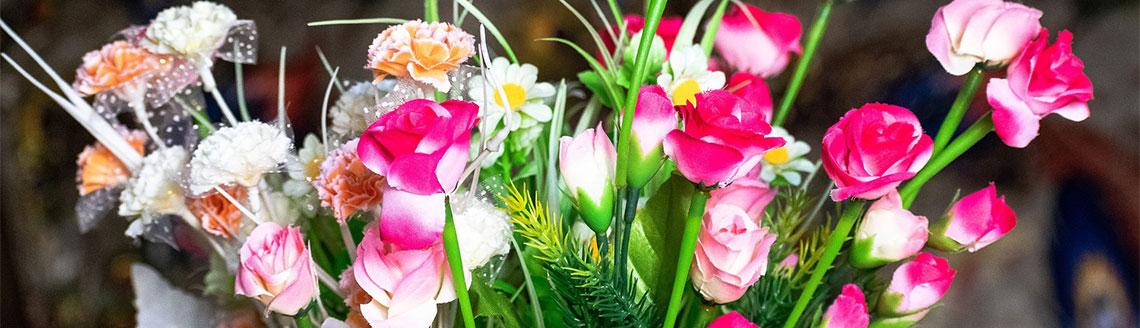
Mixing artificial flowers into a real hanging basket is one of the easiest ways to enjoy fuller, more colourful displays without the daily watering and constant deadheading. A few well-placed faux stems can fill gaps, add instant colour and keep a basket looking lush even when your living plants are between flushes. The trick is to do it in a way that supports your real plants rather than working against them, especially when it comes to drainage.
This guide explains how to combine real and artificial stems sensibly, how to keep the compost breathable, how to avoid blocked drainage and why it pays to lift your faux pieces out at the end of the season.
Why combine real and artificial flowers at all?
Real hanging baskets are beautiful but demanding. They often need watering once or twice a day in hot weather, regular feeding and ongoing deadheading to stay attractive. Slip up for a day in mid-summer and a thriving basket can quickly look tired.
Adding a few artificial flowers gives you the best of both worlds. You keep the living plants you love, while faux stems carry the display through the gaps, such as early in the season before everything has filled out, or during a quiet patch when little is in bloom. It is a particularly handy approach if you want reliable colour at eye level without committing to a fully real or fully artificial basket.
The benefits are easy to appreciate:
- Instant colour while real plants establish or recover.
- Fewer bare patches, so the basket always looks full.
- Less pressure to replace flowering plants every few weeks.
- A tidy, finished look even in slightly shaded spots where real flowers struggle.
Choosing the right artificial stems for a real basket
Because your faux flowers will be sharing a basket with living plants, choose pieces that earn their place. A handful of single, well-chosen stems usually looks far more convincing than a dense block of fake colour crammed in.
When selecting silk flowers or trailing foliage to combine with real planting, think about:
- Outdoor suitability. Outdoor conditions are tough on artificial flowers. Sun, rain and wind can all take a toll, and colours may fade over time. Look for stems described as suitable for outdoor use, and accept that even good-quality pieces will last longest if they are not permanently exposed to harsh weather.
- Colour harmony. Match your faux stems to the tones of your real plants. A cohesive palette keeps the basket looking natural rather than patchy.
- Realistic shapes. Trailing ivy, small ferns and simple flowering stems blend in well. Before planting, bend the stems and fluff out the foliage so they sit naturally among living growth.
- Stem length. You will be pushing stems into compost rather than foam, so reasonably sturdy wired stems are easier to position and stay put.
If you would rather not mix at all, a ready-made artificial hanging basket is always an option for difficult spots such as deep shade or hard-to-reach positions where regular watering simply is not practical.
Keeping the compost breathable
The most important rule when adding artificial stems to a real basket is this: the living plants must come first. Their roots need air, moisture and room to grow, so your faux additions should never smother the surface or compact the compost.
A few simple habits make all the difference:
- Use a good, open compost. A quality peat-free multipurpose compost suits a basket that only needs to last a season. For longer displays you can add some loam-based compost for structure, but be mindful of the extra weight on a hanging basket.
- Don’t over-firm the surface. When you push artificial stems in, you naturally press the compost down. Keep this gentle so the soil stays loose enough for water to soak in and air to circulate.
- Leave breathing space around real stems. Position faux pieces between living plants, not packed tightly against their crowns where they could trap damp and encourage rot.
- Mind the watering. Real plants in baskets still need checking daily in summer, as they dry out faster than other containers. Adding faux stems shouldn’t change that routine, so make sure you can still water easily without your artificial flowers getting in the way.
Avoiding blocked drainage
Good drainage keeps roots healthy and stops the compost turning into a soggy, airless mess. Artificial stems can interfere with this if you are not careful, so a little planning goes a long way.
Position stems shallowly
Push faux stems just deep enough to hold them steady. There is no need to drive them right down to the base of the basket. Keeping them in the upper layers of compost means they won’t block the drainage holes or channels at the bottom, where excess water needs to escape.
Keep drainage holes clear
If your basket has a liner, this is especially important. Whether you use a traditional moss-style liner or a manufactured one, make sure water can still pass through freely. Avoid wedging artificial stems near the base in a way that could press the liner over a drainage point.
Don’t seal the surface
Resist the temptation to cover the whole surface with dense faux foliage to hide the compost. While a little trailing greenery around the edges looks lovely, a solid mat across the top can stop rain and watering from soaking in evenly and may keep the compost too wet underneath. A few gaps allow water in and let the surface breathe.
Watch for overwatering
Real baskets suffer if they are watered until water gushes from the bottom, as this washes out the nutrients plants need to flower. Add water slowly so it seeps in, and water before feeding rather than after. Your artificial stems won’t be harmed by water, but your living plants will thank you for getting the balance right.
Styling a mixed basket that looks natural
The aim is for visitors to do a double take, unsure which flowers are real and which are not. A few styling principles borrowed from container design help enormously.
- Work in odd numbers. Grouping faux stems in threes, fives or sevens tends to look more natural than even, symmetrical blocks.
- Vary height and texture. Combine your living bedding plants with taller faux flowers and softer trailing foliage for a layered, full effect.
- Add trailing pieces through the sides. To mimic plants growing out of the basket, snip a few short lengths of artificial trailing foliage and tuck them in through the side mesh or liner, so they appear to spill naturally over the edge.
- Disguise the joins. A little real compost, moss or trailing live foliage around the base of each faux stem helps hide where it enters the basket.
- Keep the palette tight. Sticking to a coordinated colour scheme prevents the display from looking busy or obviously artificial.
If you find you enjoy the styling but tire of the real plant upkeep, you can gradually shift towards more artificial flowers and foliage, or move to a fully faux arrangement using oasis foam and weighted filler instead of compost.
Removing artificial stems seasonally
One of the quiet advantages of combining real and faux flowers is that you can refresh the basket with the seasons. Treat your artificial stems as reusable, removable additions rather than permanent fixtures.
There are good practical reasons to lift them out at the end of each season:
- Replanting. Summer bedding is usually swapped for autumn or winter planting. Removing faux stems first gives you clear access to refresh the compost and reposition real plants.
- Protecting the stems. Bringing artificial flowers in over winter spares them the worst of the frost, wind and rain. Stored carefully, they can be reused next year, keeping their colour and shape for longer.
- Checking the basket. Lifting everything out lets you inspect the liner, clear any blocked drainage and loosen compacted compost before the next planting.
To remove stems without disturbing roots too much, gently rock each one as you draw it upward rather than yanking it straight out. Brush off any compost, let them dry, then give them a quick clean before storage.
Cleaning and storing your faux stems
Artificial flowers used outdoors will pick up dust, pollen and the odd splash of mud. A simple clean keeps them looking fresh and ready for reuse.
- Wipe leaves and petals gently with a soft, damp cloth or sponge.
- Rinse with clean water if needed and allow to air dry fully.
- Avoid harsh cleaners, bleach and high-pressure hoses, which can damage colour and material.
- Store dry stems loosely in a box, ideally upright or laid flat so petals and foliage aren’t crushed.
A few minutes of care at the end of the season means your stems come back out looking their best, year after year.
A few buying considerations
If you are shopping for stems specifically to mix into living baskets, keep these points in mind:
- Choose pieces described as suitable for outdoor use if they will face the elements, and remember that fading is still possible over time outdoors.
- Pick trailing foliage such as faux ivy alongside flowering stems, so you have both colour and the softening, spilling effect baskets need.
- Buy a slightly larger range of stems than you think you need; it is easier to style a full, natural look when you have a little choice to play with.
- Consider whether a fully artificial hanging basket might suit certain spots better, particularly shaded areas, high positions or homes where daily watering is genuinely difficult.
Bringing it all together
Using artificial flowers in a real hanging basket is a thoroughly practical idea, as long as you keep your living plants’ needs front of mind. Push faux stems in shallowly, keep the compost loose and breathable, leave the drainage holes clear and avoid sealing the surface with dense foliage. Style with odd-numbered groupings, varied heights and a tidy colour palette, and your basket will look generous and natural throughout its display.
Then, when the season turns, simply lift the artificial stems out, clean them and store them ready for next time. You get the charm of real flowers, the reliability of faux colour to fill the gaps, and a basket that drains properly and stays healthy from spring right through to the following year.
 A warm welcome from The Artificial Flowers Company. We offer artificial flower arrangements, silk flowers, hanging baskets, topiary balls, topiary plants and much more - we hope you find what you're looking for!