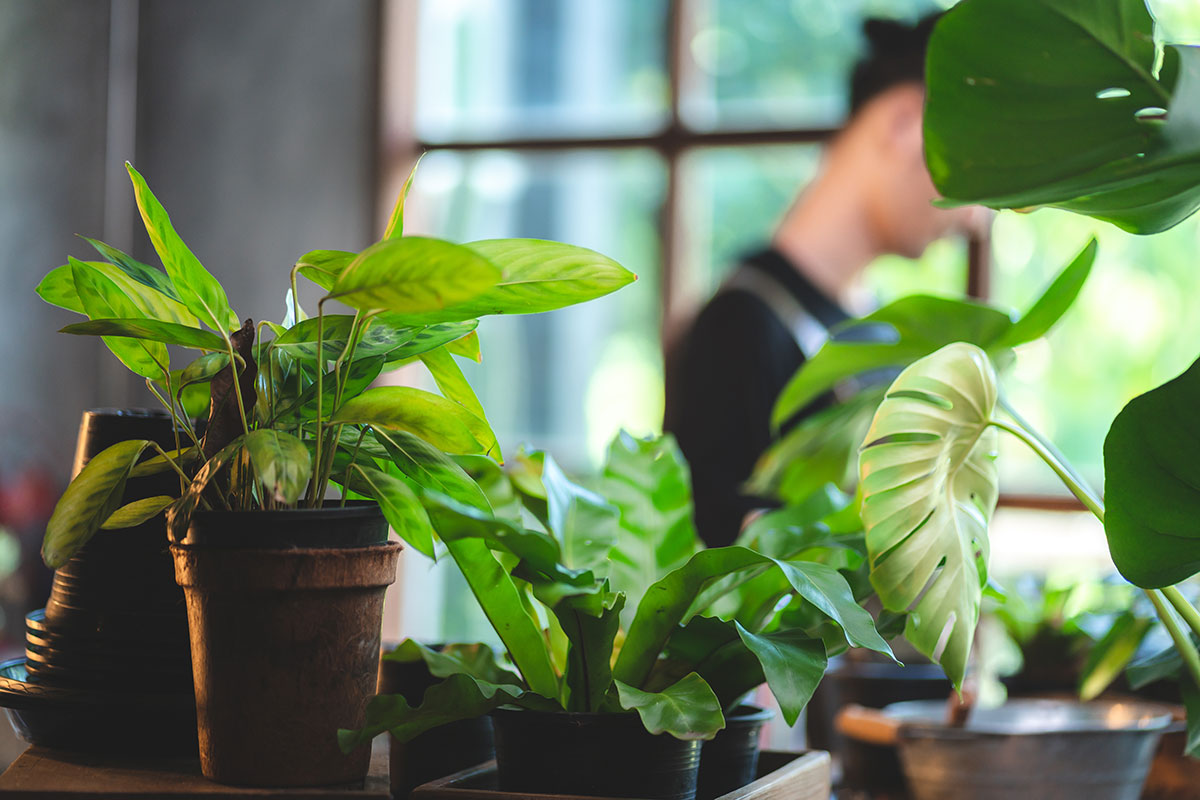
The houseplant boom was sold on a promise: greenery calms us down. But a growing share of the greenery in our homes, offices and hospitals is made of polyester and polyethylene. Does a plant that never grew still do anything for the mind? The science is smaller than you’d expect, and more interesting.
Picture a hospital waiting room. The chairs are fixed to the floor, the lighting is flat, and everyone in it would rather be somewhere else. Now add a few potted plants. Patients’ stress drops by around ten per cent. Take the plants away and put up posters of plants instead, and something odd happens: stress drops by roughly the same amount. In the one field experiment that has tested this directly, a photograph of a plant was as effective as the plant itself (Beukeboom et al., 2012).
That result, published in 2012, is the kind of finding that gets quoted in interior design features and on product packaging. It is also, on its own, misleading. Read across the research on plants and the mind, and a clear hierarchy emerges: rooms with no plants are usually the worst for us, rooms with artificial or pictured plants sit somewhere in the middle, and rooms with living plants are usually the best. The gap between real and fake is smallest for how a room looks and feels, and largest for what happens in the body.
The case for plants, real ones
The evidence that living plants are good for us is broad, if uneven. Patients recovering from surgery in hospital rooms with plants reported better outcomes than those in bare rooms (Park & Mattson, 2009). Dental patients showed physiological and psychological benefits from plants in the clinic (Elsadek et al., 2023). Office workers in a planted workspace showed measurable restoration in a crossover experiment run in a real workplace (Zhang et al., 2025). Simply interacting with an indoor plant suppressed autonomic nervous system activity in young adults, a physiological signature of reduced stress (Lee et al., 2015).
Two systematic reviews conclude that the most reliable effects of indoor plants are higher positive emotion and lower negative feeling (Han & Ruan, 2019; Bringslimark et al., 2009), and a meta-analysis found modest objective benefits, including lower diastolic blood pressure (Han et al., 2022). A broader meta-analysis of physiological responses to natural environments supports the underlying theory, that exposure to nature helps the body recover from stress (Gaekwad, 2023).
Not every study agrees. Field experiments in real offices, classrooms and university study rooms have found no clear effect on mood or productivity (Van Den Bogerd et al., 2021; Thatcher et al., 2020; Tennant, 2017; De Vries et al., 2023). The benefit of plants, it seems, depends on how many there are, how visible they are, and what else is competing for attention in the room. A single ficus in the corner of an open-plan office is not a forest.
Better than a blank wall
If plants help because of something they do to the air, or because they smell of soil and leaf, then a plastic plant should do nothing. If they help because of something they do to the eye, then a plastic plant might do quite a lot. The research on simulated nature leans towards the second view, with caveats.
In picture experiments, images of green plants were rated the most mentally restorative of the options shown, and were the best at restoring positive mood after a stressor. They did not, however, reliably reduce negative mood or the stress response itself (Michels et al., 2022). In virtual reality, adding virtual plants to a simulated office improved psychological wellbeing, positive affect and feelings of restoration compared with an empty virtual office, and improved cognitive performance too (Mostajeran et al., 2023). A 2025 study compared a real living wall with a virtual one during a demanding task: both increased physiological relaxation, but positive emotions rose only in front of the real thing (Serra et al., 2025).
A review asking whether even small amounts of greenery can reduce stress found that they can, while noting that the quality of the underlying studies is mixed (Gu et al., 2022). The pattern across all of this is consistent: a representation of a plant, whether printed, projected or moulded, moves people in the right direction compared with nothing at all. It just does not move them as far.
Head to head
Remarkably few studies have put artificial and real plants in front of the same people under the same conditions. Those that have tend to come from a handful of laboratories in Japan and South Korea, and they tend to agree.
In one, Japanese high-school students looked at a tray of real pansies or an indistinguishable tray of artificial ones. The real flowers produced stronger physiological relaxation and more positive psychological responses (Igarashi et al., 2015). The same group had earlier shown that simply looking at real foliage plants relaxed teenagers both physiologically and psychologically (Ikei et al., 2014).
In Korea, adults were shown various types of green plants, including artificial ones, while their autonomic nervous system activity was recorded. Real plants produced higher ratings for comfort, relaxation and naturalness, better mood, and lower sympathetic arousal, the body’s fight-or-flight setting (Jeong & Park, 2021). A follow-up using EEG found that the type of plant changed activity in the prefrontal cortex, with real plants again scoring higher on how natural they felt (Kim et al., 2024). And when participants were asked to actually make something, arranging either natural or artificial flowers, those working with the natural ones relaxed more, by both psychological and physiological measures (Yang et al., 2022).
There is one exception, and it is recent. In a 2024 study, participants viewed either artificial or natural plants for three minutes. Both reduced negative emotions, and by a similar amount (Park et al., 2024). The authors suggest that for short periods of simple viewing, an artificial plant may substitute for a real one. It is a single study with a brief exposure measuring a single outcome, but it is the clearest evidence yet that the eye can be satisfied by a convincing fake, at least for a while.
| Outcome | Real plants | Artificial plants | No plants |
|---|---|---|---|
| Comfort | Higher | Sometimes improved | Lowest |
| Relaxation | Higher | Mixed or smaller gains | Lowest |
| Perceived naturalness | Clearly higher | Lower | Lowest |
| Mood and vigour | Better | Usually weaker | Worst |
| Physiological stress | Lower sympathetic arousal | Weaker or absent | Worst |
Findings from direct comparison studies (Jeong & Park, 2021; Igarashi et al., 2015; Yang et al., 2022; Kim et al., 2024; Mostajeran et al., 2023).
What is it about a real plant?
The mechanism with the most support is almost embarrassingly simple: plants make rooms look nicer, and people in nicer rooms feel better. In the hospital waiting room, the fall in stress was partly explained by how attractive patients found the space (Beukeboom et al., 2012). An earlier healthcare study reached the same conclusion, finding that perceived attractiveness mediated the stress-reducing effect of plants (Dijkstra et al., 2008). In offices, healthy, attractive plants with shapes people liked were linked to stronger perceived wellbeing and, intriguingly, to better perceptions of air quality, regardless of what the air was actually like (Berger et al., 2022).
Attractiveness is a quality an artificial plant can possess, which is presumably why the posters held their own against the pots. What a poster cannot supply is everything else a living plant brings: scent, measurable changes to the air (Zuo et al., 2025), the visual complexity and faint imperfection of real growth, the tacit knowledge that the thing in front of you is alive, and the possibility of touching or tending it. Touching real grass produced measurable psychophysiological benefits in older adults (Hassan & Zhang, 2024), and short exposure to biophilic indoor environments left traces in both brain activity and saliva (Li et al., 2023). Which of these pathways accounts for the advantage of the real over the artificial, nobody has yet isolated.
Can we trust the research?
The literature on plants and wellbeing has well-known weaknesses, and its reviewers are candid about them: small samples, brief exposures, moderate study quality, a high risk of bias in places, and laboratory conditions that may not survive contact with a real office (Han & Ruan, 2019; Bringslimark et al., 2009; Han et al., 2022; Gu et al., 2022). The artificial-versus-real comparisons are the thinnest part of it. Most involve a few minutes of looking, or one session of flower arranging, not weeks of living alongside the plants in question.
The gaps are telling. Older adults and hospital patients, the very groups for whom living plants are often ruled out on grounds of hygiene, allergy or maintenance, barely feature in direct comparisons (Yeo et al., 2020; Bettinger & Schweighart, 2022). A randomised trial comparing real plants with artificial natural structures has been registered but, at the time of writing, only its protocol is published. And almost no study has compared artificial plants, real plants and no plants in the same real-world setting over a meaningful period. Reviews of biophilic design in hospitals continue to recommend nature-integrated strategies while acknowledging how little is known about which forms of nature deliver the benefit (Du et al., 2026).
| Claim | Strength of evidence |
|---|---|
| Real plants reduce stress and improve psychological state compared with no plants | Strong |
| Real plants usually outperform artificial plants on relaxation and naturalness | Moderate |
| Artificial plants or plant imagery help more than no plants | Moderate |
| Attractiveness partly explains the psychological benefit of plants | Moderate |
| Artificial plants can fully replace real plants for wellbeing | Weak |
The verdict
The research supports a graded answer rather than a yes or no. A room with no greenery is, on the evidence, the worst place to be. A room with artificial plants, or even pictures of plants, is reliably better, with the gains concentrated in how pleasant the space feels and how quickly a good mood returns. A room with living plants is usually better again, and the advantage shows most clearly in the measures that are hardest to fake: a sense that the space is natural, a feeling of calm, and a nervous system that has stood down.
For anyone deciding what to put in a windowless corridor, a care home lounge or a flat where every real plant has died, the practical reading is this. Artificial greenery is a partial substitute, not a replacement, and its value appears to rest largely on how convincing and how attractive it is. A plant that reads as healthy and real is doing the job the research describes. One that reads as plastic, in all likelihood, is not. And where a living plant can survive, the science still favours the living plant.
References
- Berger, J., Essah, E., Blanuša, T., & Beaman, C. P. (2022). The appearance of indoor plants and their effect on people’s perceptions of indoor air quality and subjective well-being. Building and Environment. https://doi.org/10.1016/j.buildenv.2022.109151
- Bettinger, L., & Schweighart, R. (2022). Psychological and physiological effects of visual stimulation with real plants and artificial natural structures: A study protocol for a randomised controlled trial. The Journal of Health Design. https://doi.org/10.21853/jhd.2022.181
- Beukeboom, C. J., Langeveld, D., & Tanja-Dijkstra, K. (2012). Stress-reducing effects of real and artificial nature in a hospital waiting room. The Journal of Alternative and Complementary Medicine, 18, 329–333. https://doi.org/10.1089/acm.2011.0488
- Bringslimark, T., Hartig, T., & Patil, G. (2009). The psychological benefits of indoor plants: A critical review of the experimental literature. Journal of Environmental Psychology, 29, 422–433. https://doi.org/10.1016/j.jenvp.2009.05.001
- De Vries, S., Hermans, T., & Langers, F. (2023). Effects of indoor plants on office workers: A field study in multiple Dutch organizations. Frontiers in Psychology, 14. https://doi.org/10.3389/fpsyg.2023.1196106
- Dijkstra, K., Pieterse, M., & Pruyn, A. (2008). Stress-reducing effects of indoor plants in the built healthcare environment: The mediating role of perceived attractiveness. Preventive Medicine, 47(3), 279–283. https://doi.org/10.1016/j.ypmed.2008.01.013
- Du, Y., Xie, M., & Zou, Y. (2026). Biophilic design in hospital environments: A rapid review of nature-integrated strategies and patient outcomes. Frontiers in Public Health, 14. https://doi.org/10.3389/fpubh.2026.1786483
- Elsadek, M. A., Xie, J., & Jie, G. (2023). The impact of indoor plants on patient recovery: Physiological and psychological effects in dental clinics. HortScience. https://doi.org/10.21273/hortsci17326-23
- Gaekwad, J. S. (2023). A meta-analysis of physiological stress responses to natural environments: Biophilia and Stress Recovery Theory perspectives. Journal of Environmental Psychology. https://doi.org/10.1016/j.jenvp.2023.102085
- Gu, J., Liu, H., & Lu, H. (2022). Can even a small amount of greenery be helpful in reducing stress? A systematic review. International Journal of Environmental Research and Public Health, 19. https://doi.org/10.3390/ijerph19169778
- Han, K.-T., & Ruan, L.-W. (2019). Effects of indoor plants on self-reported perceptions: A systemic review. Sustainability. https://doi.org/10.3390/su11164506
- Han, K.-T., Ruan, L.-W., & Liao, L. (2022). Effects of indoor plants on human functions: A systematic review with meta-analyses. International Journal of Environmental Research and Public Health, 19. https://doi.org/10.3390/ijerph19127454
- Hassan, A., & Zhang, D. (2024). Psychophysiological impact of touching landscape grass among older adults. Journal of Urban Health, 101, 792–803. https://doi.org/10.1007/s11524-024-00875-7
- Igarashi, M., Aga, M., Ikei, H., Namekawa, T., & Miyazaki, Y. (2015). Physiological and psychological effects on high school students of viewing real and artificial pansies. International Journal of Environmental Research and Public Health, 12, 2521–2531. https://doi.org/10.3390/ijerph120302521
- Ikei, H., Song, C., Igarashi, M., Namekawa, T., & Miyazaki, Y. (2014). Physiological and psychological relaxing effects of visual stimulation with foliage plants in high school students. Advances in Horticultural Science. https://doi.org/10.13128/ahs-22823
- Jeong, J., & Park, S.-A. (2021). Physiological and psychological effects of visual stimulation with green plant types. International Journal of Environmental Research and Public Health, 18. https://doi.org/10.3390/ijerph182412932
- Kim, S.-H., Lee, C. H., & Park, S.-A. (2024). Brain wave changes in the prefrontal cortex when exposed to varying plant types as visual stimuli. HortScience. https://doi.org/10.21273/hortsci17962-24
- Lee, M.-S., Lee, J., Park, B.-J., & Miyazaki, Y. (2015). Interaction with indoor plants may reduce psychological and physiological stress by suppressing autonomic nervous system activity in young adults: A randomized crossover study. Journal of Physiological Anthropology, 34. https://doi.org/10.1186/s40101-015-0060-8
- Li, Z., Zhang, W., Cui, J., Liu, H., & Liu, H. (2023). Beneficial effects of short-term exposure to indoor biophilic environments on psychophysiological health: Evidence from electrophysiological activity and salivary metabolomics. Environmental Research, 243, 117843. https://doi.org/10.1016/j.envres.2023.117843
- Michels, N., Debra, G., Mattheeuws, L., & Hooyberg, A. (2022). Indoor nature integration for stress recovery and healthy eating: A picture experiment with plants versus green color. Environmental Research, 113643. https://doi.org/10.1016/j.envres.2022.113643
- Mostajeran, F., Steinicke, F., Reinhart, S., Stuerzlinger, W., Riecke, B., & Kühn, S. (2023). Adding virtual plants leads to higher cognitive performance and psychological well-being in virtual reality. Scientific Reports, 13. https://doi.org/10.1038/s41598-023-34718-3
- Park, J., Kang, M.-J., Song, Y., Lee, Y., Kim, J., Jeong, S., & Lee, J. (2024). Comparison of the differences in psychological effects between artificial and natural plants. Journal of Environmental Science International. https://doi.org/10.5322/jesi.2024.33.1.103
- Park, S.-H., & Mattson, R. (2009). Ornamental indoor plants in hospital rooms enhanced health outcomes of patients recovering from surgery. The Journal of Alternative and Complementary Medicine, 15, 975–980. https://doi.org/10.1089/acm.2009.0075
- Serra, H., Zavattaro, C., Eid, M., Farina, P., Abbatescianna, D., Cirillo, E., Gammeri, R., Celi, L., Scariot, V., & Ricci, R. (2025). Biophilic interventions in real and virtual environments reduce stress during cognitively demanding tasks. Scientific Reports, 15. https://doi.org/10.1038/s41598-025-23224-3
- Tennant, L. A. (2017). Stress reducing effects of indoor plants in a classroom setting. https://doi.org/10.33015/dominican.edu/2017.psy.rp.05
- Thatcher, A., Adamson, K., Bloch, L., & Kalantzis, A. (2020). Do indoor plants improve performance and well-being in offices? Divergent results from laboratory and field studies. Journal of Environmental Psychology, 71, 101487. https://doi.org/10.1016/j.jenvp.2020.101487
- Van Den Bogerd, N., Dijkstra, S. C., Koole, S., Seidell, J., & Maas, J. (2021). Greening the room: A quasi-experimental study on the presence of potted plants in study rooms on mood, cognitive performance, and perceived environmental quality among university students. Journal of Environmental Psychology, 73, 101557. https://doi.org/10.1016/j.jenvp.2021.101557
- Yang, J.-W., Lee, M.-S., Joung, D., & Park, B.-J. (2022). Effects of using natural and artificial flowers in flower arrangement on psychological and physiological relaxation. Journal of People, Plants, and Environment. https://doi.org/10.11628/ksppe.2022.25.1.39
- Yeo, N. L., Elliott, L., Bethel, A., White, M., Dean, S., & Garside, R. (2020). Indoor nature interventions for health and wellbeing of older adults in residential settings: A systematic review. The Gerontologist. https://doi.org/10.1093/geront/gnz019
- Zhang, G., Li, T., Cui, Y., & Ren, T. H. (2025). The restorative effects of working individually in a vegetated office space: A crossover controlled experimental study in real-life workplace setting. WORK, 81, 3070–3082. https://doi.org/10.1177/10519815251323994
- Zuo, L., Wu, D., Deng, M., Wei, R., & Yuan, Y. (2025). Quantitative study on the air-purification and aesthetic effects of Epipremnum aureum on indoor occupants’ psycho-physiological responses. Indoor and Built Environment, 34, 661–677. https://doi.org/10.1177/1420326×251314542
 A warm welcome from The Artificial Flowers Company. We offer artificial flower arrangements, silk flowers, hanging baskets, topiary balls, topiary plants and much more - we hope you find what you're looking for!