artificial hanging baskets, topiary balls, hedges and topiary trees
Artificial flowers
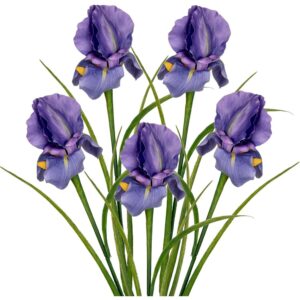
Artificial flowers are an easy way to enjoy flowers around your home throughout the year. Choose realistic faux and silk flowers for arrangements, vases and displays, from individual stems and sprays to ready-made bouquets and flower arrangements.
A vase of flowers changes a room. The problem with fresh ones is that they change it for about a week, then spend three days reminding you to throw them out. Good artificial flowers give you the same lift every day for years, but the gap between good and bad is wider here than anywhere else in the artificial plant world. This guide explains what the different materials actually are, how to tell a convincing stem from a cheap one, how to choose a vase and how many stems to put in it, where to put the finished arrangement so it stays looking new, and how to look after it. Whether you call them artificial flowers, fake flowers, faux flowers or silk flowers, this guide covers the single stems, bouquets and ready-made arrangements that go indoors in a vase; for outdoor baskets, boxes and hedging see our other guides.
1. Why artificial flowers indoors?
Most people arrive at artificial flowers for one of four reasons. They're tired of paying for fresh flowers that die. They have a spot with no natural light where nothing real will survive: a hallway, a windowless bathroom, a north-facing landing. They have a cat, a toddler or hay fever. Or they want one thing to look perfect on a particular day, whether that's a wedding, a party or a photograph, with no risk of wilting. Good artificial flowers solve all four, and the best of them do it so well that guests check twice.
2. Fresh vs artificial: cost and effort compared
Fresh flowers feel cheap because you buy them a bunch at a time. Add it up and it looks different.
Fresh flowers
Quality artificial flowers
Supermarket bunch
£8–£15, lasts 5–10 days
£25–£60 for a vase-worth of good stems (e.g. ten real-touch roses at around £25); £50–£180 for a finished bouquet or arrangement. One-off.
Florist hand-tied
£35–£60 medium; £60–£120 large
Subscription
£20–£45 per delivery
A year of flowers on the kitchen table
£400–£750 for a weekly supermarket bunch; £1,000+ for a fortnightly florist bouquet
£0 after purchase
Upkeep
Fresh water every two days, trim stems, remove dead heads, bin the lot
A dust every few weeks
Where it can go
Needs light, away from radiators and fruit bowls
Anywhere, including rooms with no window
Hay fever and cats
Pollen; many species toxic
No pollen; no plant toxins
Looks its best
Three or four days
Every day for several years
Fresh flowers win on scent and on the simple pleasure of something living. If you love the Saturday-morning ritual, keep it. Many people now do both: a permanent artificial arrangement in the hall or on the mantelpiece, and fresh flowers on the table when they fancy them.
3. Stems, sprays, bushes, bouquets and arrangements
The words get used loosely, so here's what you're actually buying:
Single stem. One flower on one stem, typically 40–70cm long. The building block of a DIY arrangement and the most flexible format: cut to length, bend to shape, mix as you like.
Spray. One stem that branches into several flowers and buds. A spray with four heads fills about as much vase as two or three single stems, so it's often better value if the length suits you. Good for roses, orchids, blossom and berries.
Bush. A cluster of stems joined at a single base, like a small plant. Bushes are designed for pots, baskets and window boxes rather than vases; the shared base makes them awkward to cut and arrange.
Bunch or bundle. Several identical stems tied together, usually six to twelve. Economical, and sensible if you want a single-flower display, but you'll still need to separate, bend and arrange them.
Bouquet. A ready-mixed, hand-tied group of flowers and foliage, finished so you can drop it straight into a vase. Pay for the designer's eye rather than for the stems.
Arrangement. A bouquet already fixed in its own vase, bowl or pot, usually with foam and often with faux water or moss. Zero effort, but you can't change the vase and the price includes it.
Fillers and foliage. Gypsophila, eucalyptus, ruscus, ferns, grasses and berries. Not glamorous, but they're what makes a vase of three roses look like a florist did it.
Materials: silk flowers, real touch, plastic and foam
Are fake flowers and silk flowers the same thing? Broadly, yes. "Artificial flowers", "fake flowers" and "faux flowers" all mean the same thing: any flower that isn't real. "Silk flowers" is a trade term for the fabric-petalled kind, which are nearly always polyester rather than silk. So all silk flowers are fake flowers, but not all fake flowers are silk: real-touch, plastic and foam flowers are made quite differently, and the differences matter when you're choosing.
Polyester ("silk") flowers. Petals cut from printed or dyed polyester, usually heat-cut so the edges don't fray, assembled on a wire-cored plastic stem. The widest quality range of any material: from a few pence a stem to several pounds for hand-finished petals with wired edges you can shape. Good polyester looks excellent from a metre; up very close you can usually see the weave. Durable, light, easy to clean, and the right choice for delicate, thin-petalled flowers (peonies, poppies, hydrangea, gypsophila).
Real touch. Petals made from or coated in polyurethane (PU) or latex, moulded from real flowers so the veining and edge detail are cast rather than printed. Cool and slightly yielding under the fingers, like a fresh petal, and the surface is smooth rather than woven, so they pass the close-up test that polyester fails. Best for thick-petalled flowers: roses, tulips, calla lilies, orchids, peonies, anemones. Two honest caveats. Latex versions can go slightly tacky above about 30°C, stiffen in cold, and may yellow over years in sun; PU is more stable. And real-touch surfaces need gentler cleaning (see section 13).
Plastic (PE/PVC). Moulded plastic petals and leaves. Stiff and shiny in cheap versions, surprisingly good in expensive ones. Stands up to handling and sun better than fabric, which is why most outdoor plants are plastic, but for an indoor vase it tends to lose to the two above.
Foam (EVA). Soft, matt, spongy petals. Pretty in a stylised way, cheap, and very easy to dent. Not aiming for realism; think event backdrops rather than the hall table.
Dried and preserved. Real flowers, dried or glycerine-preserved, often sold alongside artificial. Beautiful and natural, but fragile, dusty, prone to fading and not washable. Lovely mixed with artificial stems for texture.
The best stems mix materials: a PU rose head on a plastic stem with polyester leaves, or a polyester peony with a velvet-flocked centre to mimic a pollen-dusted stamen. That's a sign of care, not compromise.
5. How to tell a good stem from a cheap one
Product photos are taken by people who know how to hide flaws. Here's what to look for in the close-ups, and what to check when the box arrives:
Colour that varies within a petal. Real petals are darker at the base, paler at the tips, sometimes blushed or veined. One flat shade of pink across the whole head is the biggest giveaway of all.
Petal edges. Sealed, tapered or gently irregular. Raw, frayed or perfectly uniform scalloped edges mean budget polyester.
Wired petals and leaves. A fine wire inside the petal edge or leaf spine lets you curl, cup and angle each one. Unwired petals sit however they left the factory.
Asymmetry. A slightly open bud, one petal turned back, leaves at different angles. Mass-produced stems are symmetrical; good ones are deliberately not.
The stem itself. Matt, with a hint of colour variation and realistic nodes, rather than glossy bright green. Look for the join where the head meets the stem: hidden by a calyx on good stems, a visible blob of glue on cheap ones.
Leaves. People judge flowers by the flowers but spot fakes by the leaves. Veins, a matt surface and two tones of green are what you want; shiny, flat, single-colour leaves let the whole stem down.
Centres. Flocked, velvet or textured stamens and a believable depth to the centre. Flat printed centres look painted on.
Weight and drape. A good stem has a little heft and the head nods slightly, as a real one would. A cheap one weighs nothing and points straight up.
Named material. "Real touch", "PU", "latex-coated" or "wired silk" are specific claims you can hold the seller to. "Realistic" and "lifelike" are not.
Some flowers are easier to fake than others. Thick, waxy or sculptural petals translate well into moulded materials; very fine, papery or complex flowers are harder, and the cheap versions of them look it.
Reliably convincing: roses (especially real touch), peonies, tulips, calla lilies, phalaenopsis orchids, hydrangea, ranunculus, anemones, magnolia and blossom branches, eucalyptus and most foliage, gypsophila and other airy fillers.
Good from a distance, harder up close: lilies, dahlias, sunflowers, chrysanthemums, gerberas, daffodils. Buy the best you can afford, use fewer, and surround them with foliage.
Rarely convincing in budget versions: sweet peas, cosmos, lavender, carnations, and anything with dozens of tiny petals that has to be printed rather than shaped.
A useful trick: pick flowers that are genuinely in season. A vase of peonies in June is believable; the same vase in December announces itself. And choose colours that exist in nature. A blue rose fools nobody.
7. Choosing a vase
The vase is half the display, and with artificial flowers it can be anything: a jug, a teapot, a wooden crate, a basket. Nothing needs to hold water. Four measurements decide what will work:
Height. Stems should stand roughly 1.5 to 2 times the height of the vase above the surface, so for a 30cm vase you want 45–60cm of stem once cut. Shorter looks stumpy; much taller looks top-heavy.
Opening. This matters more than the outside width. A narrow neck of 8–10cm holds a few stems upright on its own and fans them out above the rim. A wide mouth of 13cm or more lets stems flop outwards, so it needs more stems, more foliage, or a hidden support.
Base. Artificial stems are light but tall; a slim vase with a small base will tip once there are a dozen stems leaning in it. Pebbles or sand in the bottom fix this.
Clear or opaque. A clear glass vase shows the stems, which means the stems need to look right and the vase needs to stay clean (empty glass with plastic stems is the second-commonest giveaway after flat colour). Opaque vases hide everything, including the foam that makes arranging easy.
The old florists' rule still holds: the fancier the vase, the simpler the flowers should be. Our post on buying artificial flowers and keeping it real has more on matching vase to display.
8. How many stems do I need?
Starting points, assuming single-flower stems; use fewer if you're using sprays, more if the mouth is wide:
Vase height
Stems
Typical mix
Up to 25cm (bud vase, jug, jar)
3–6
1–3 flowers plus a sprig or two of foliage or gypsophila
25–35cm (standard table vase)
6–12
5–7 focal flowers, 2–3 foliage, 1–2 filler
35–50cm (floor or console vase)
9–15
6–9 focal flowers, 3–4 foliage, 2 tall line stems
Over 50cm (statement floor vase)
5–9 tall branches
Blossom, magnolia, eucalyptus or pampas; flowers get lost at this scale
Odd numbers help a first attempt look relaxed rather than paired off. A vase of ten identical roses works precisely because they're identical; a mixed arrangement looks better with 3, 5 or 7 of the main flower. And a single stem in a bud vase, repeated down a table, is often more effective than one large vase.
9. Arranging: the ten-minute method
Everything arrives squashed. The difference between "obviously fake" and "where did you get those?" is this ten minutes.
Fluff first. Open every petal and leaf, cup the petals slightly, and bend the leaves so they aren't all in one plane. Leave real-touch flowers near a warm radiator (not on it) for an hour if they've arrived stiff.
Cut with wire cutters, not scissors. Nearly every stem has a wire core; scissors will blunt and the cut will be ragged. Hold each stem against the vase, cut a little longer than you think, and step the lengths so heads sit at different heights.
Foliage in first. Two or three stems leaning out over the rim form the frame and hide the mechanics.
Tallest stems next, towards the centre, or towards the back if the vase stands against a wall.
Focal flowers at different heights, each turned to face a slightly different direction. Bend a couple so they nod outwards rather than stare upwards.
Fillers last to close gaps, then step back to where people will actually see it and adjust.
Don't add water. It rusts the wire inside the stems and does nothing for the flowers.
If you only remember one thing: angle, don't align. Stems that lean, cross and vary in height look grown; stems standing to attention look stuck in.
10. What goes in the vase: pebbles, foam and faux water
Nothing is often fine. A narrow-necked vase holds stems by itself.
Pebbles, glass beads or sand add weight to a light vase and hold stems in place. In a clear vase they also disguise the fact that there's no water. Our post on sixteen ways to use artificial flowers at home includes filling the vase with lemons or apples, which works because the stems don't need water.
Dry floral foam is the florist's answer for opaque vases and bowls: cut to fit, push stems in at the angles you want and they stay there. Use the grey dry foam, not the green wet foam sold for fresh flowers. Never visible in a glass vase.
A tape grid solves a wide-mouthed vase: criss-cross clear tape over the opening and feed stems through the squares. Foliage over the rim hides it.
Faux water (acrylic water, floral resin) is a two-part epoxy that sets glass-clear in the base of a vase and looks remarkably like the real thing. Before you reach for it, understand what you're committing to: it's permanent, it bonds the stems and the vase into one object, and you'll never be able to change the arrangement or the vase again. If you go ahead: use a product sold specifically as acrylic or floral water (polyester casting resin yellows, shrinks and smells), choose one that cures slightly flexible so a glass vase doesn't crack as temperatures change, measure the two parts precisely, mix slowly for several minutes, pour 3–5cm on a level surface, set the stems within the working time, and let it cure out of direct sun for 24 hours. Ready-made arrangements with faux water already in them save you all of that.
11. Where to put them: light, heat and fading
Artificial flowers fade indoors too. Window glass blocks some UV but lets through UVA, and standard polyester on a sunny sill can show visible colour change within a year, with whites turning cream first. Heat makes it worse: a windowsill above a radiator or a shelf under a halogen spotlight will age flowers faster than light alone. And in kitchens and smokers' homes, cooking grease and nicotine chemically stain pale petals yellow, which no amount of dusting reverses.
So: the darker the spot, the longer they last, and the darker spots are exactly where real flowers fail. Put your boldest colours in hallways, landings, bathrooms and north-facing rooms. For a sunny room, set the vase back from the glass, choose paler colours and greenery (pastels and creams fade gracefully; reds, purples and blues fade obviously), and give the vase a quarter turn every week or two so one side doesn't take all the light. In kitchens, choose polyester over real touch (easier to wash) and keep the vase away from the hob.
This is one of the strongest reasons to go artificial, and one people rarely think of until something goes wrong.
Cats and lilies. Every part of a true lily (Lilium, including Stargazer, Asiatic and Easter lilies, and daylilies) is toxic to cats: petals, leaves, pollen brushed onto fur, and even the vase water. A small amount can cause fatal kidney failure within three days. Vets advise cat owners not to bring them into the house at all. Daffodils, tulip bulbs, hydrangea, azalea and many others are harmful to dogs and cats too. Artificial flowers remove the risk entirely.
Chewing hazards remain. Artificial stems aren't toxic but they aren't edible either. Small berries, wired leaves and loose petals can be swallowed or choked on, so keep arrangements out of reach of puppies, kittens and toddlers, and choose larger-petalled designs without berries for family rooms.
Hay fever and asthma. Artificial flowers release no pollen and, unless you've sprayed them, no fragrance. Allergy UK advises hay fever sufferers to limit fresh flowers indoors; a good artificial arrangement is the obvious substitute. If someone reacts to artificial flowers, it's almost always dust (clean them) or a scent spray (don't use one), not the flowers.
Latex allergy. Some real-touch flowers are latex-coated. For most people in most settings that's irrelevant, but if a bride with a latex allergy is going to hold a bouquet for six hours, choose PU or polyester.
13. Cleaning, by material
Dust is the enemy of realism; a dusty rose looks fake from across the room. A quick blast every few weeks and a proper clean once or twice a year is all it takes, but the method depends on the material.
All flowers, routine dusting: a hairdryer on cool from 30cm away, a can of compressed air, or a soft make-up brush. Do this before any wet cleaning so you're not turning dust into mud.
Polyester ("silk") flowers, deep clean: put a few stems head-down in a large bag with half a cup of table salt (or rice), hold the stem ends and shake gently for a minute; the grains lift the dust without water. Brush out the salt. For grime, a cloth dampened with cool water and a drop of washing-up liquid, then air-dry on a towel away from heat. Sturdy polyester stems can be rinsed briefly under a lukewarm shower; don't soak them, because soaking softens the glue and floral tape.
Real-touch (PU and latex) flowers: no salt, no soaking, no alcohol. Wipe with a dry or barely damp microfibre cloth, or a fragrance-free baby wipe for marks. Water sitting on a latex surface can leave it sticky.
Flocked, velvet, glittered or dried stems: dry methods only.
Avoid on everything: hot water, hairspray (it's sticky and attracts more dust), bleach, window cleaner, solvents and pressure from a tap. Test any wet method on one inexpensive stem first.
14. Changing with the seasons, and storing stems
A permanent base of foliage, with a handful of flowers swapped four times a year, gives you a fresh-looking room for the price of a few stems. Keep eucalyptus or ruscus in the vase all year; add tulips and blossom in spring, peonies and roses in summer, hydrangea and berries in autumn, and white roses, pine and a few battery lights in December. Our post on making an artificial display seasonal without buying four of them works just as well for a vase as for a basket.
Store the stems you're not using upright in a tall box or a bucket, heads up and not touching, somewhere dry and dark. Laid flat in a drawer they crush. Dust before storing, and bend them back into shape when they come out.
15. Weddings and events
Artificial flowers have become mainstream for weddings, and for sensible reasons: they can be made weeks ahead and checked, they don't wilt in a hot marquee or a cold church, the colours you want are available in any month, nobody sneezes, and the bouquet is a keepsake rather than compost. On cost, a good faux bridal bouquet runs roughly £20–£180 against £80–£200+ fresh, and a whole wedding's flowers roughly £500–£2,500 faux against £2,500–£7,000 fresh.
The trade-offs are scent (brides often spritz the bouquet with their perfume) and the fact that a faux bouquet will be held, photographed close up and looked at by every guest, so this is the one place where only real-touch or top-grade wired silk will do. Many couples now go hybrid: a faux bouquet and buttonholes they'll keep, with fresh flowers where scent matters, and faux for the large installations and centrepieces where visual impact and budget matter most. Buy a sample stem before committing to fifty.
16. Artificial flowers for businesses
Reception desks, restaurant tables, hotel corridors, salons and show homes are where artificial flowers earn their keep: no weekly florist bill, no Monday-morning droop, no water rings on the furniture. For commercial premises:
Quality matters more, not less. Customers see these flowers at arm's length every visit. Real touch for anything on a table or desk; good polyester for anything above head height or behind a counter.
Fire safety. Your fire risk assessment may require decorative items to be fire-retardant. Ask the supplier for a flame-retardant certificate for the specific product, and if none is available, assume it isn't treated. Keep arrangements away from candles and heaters regardless.
Build cleaning into the rota. A monthly cool-hairdryer blast is a two-minute job that keeps the whole investment looking new.
Rotate. Two sets of arrangements swapped seasonally look like a business that bothers, and halve the light exposure on each.
17. An honest word on scent and sustainability
Artificial flowers don't smell, and the scent sprays sold for them tend to smell of scent spray. If fragrance matters to you, a reed diffuser nearby or a few stems of real dried lavender in the mix are better answers.
On sustainability: artificial flowers are plastic and will outlast you in landfill. Cut flowers, on the other hand, are mostly flown or trucked in from Kenya, Colombia and the Netherlands, grown under heat and light, chilled and binned within a fortnight. Neither is innocent. The responsible way to buy artificial is the way this guide recommends anyway: buy fewer, better stems, keep them for years, clean rather than replace them, and when a stem finally fades, move it to a less prominent spot before you throw it away.
18. How long will they last?
Indoors and out of direct sun, good polyester flowers keep their colour and shape for five to ten years, and real-touch flowers for as long, provided the surface is kept clean and away from heat. On a sunny windowsill, expect visible fading within one to three years depending on colour and material. Foam flowers dent and fade within a couple of years anywhere. The stems you'll replace first are the ones in the brightest spot, so if you're buying a set, put the spares in a drawer and rotate them in when the front-facing flowers tire.
19. Buyer's checklist
Before you click "buy":
Is the material named (real touch / PU / latex / wired silk), or does it just say "realistic"?
Do the close-ups show colour variation within the petals, sealed edges, veined matt leaves and a hidden head-to-stem join?
Is the stem length stated, and will it give you 1.5–2 times your vase height after cutting?
Single stems, sprays or a bunch? Have you counted heads, not stems?
Do you have enough: 3–6 for a small vase, 6–12 for a table vase, 9–15 for a floor vase?
Have you included foliage and a filler, not just flowers?
Is the flower one that fakes well (rose, peony, tulip, orchid, hydrangea) or one to buy carefully (lily, dahlia, sunflower)?
Is the colour one that exists in nature, and roughly in season?
Where will it sit? If it's a sunny sill, have you leaned towards pale colours and greenery?
Pets or small children in the house? Have you avoided berries and kept it out of reach?
Do you have wire cutters, and something for the base of the vase?
If you're tempted by faux water, are you sure you'll never want to change the arrangement?
We hope this helps you choose flowers you'll still be enjoying in five years. If you have a question we haven't covered, get in touch and we'll be glad to help.
FAQs
What does "real touch" mean on artificial flowers?
Real-touch flowers have petals made from or coated in polyurethane (PU) or latex, moulded from real blooms so the veining and edges are cast rather than printed. They feel cool and slightly yielding like a fresh petal and pass the close-up test that fabric flowers fail. They suit thick-petalled flowers such as roses, tulips, orchids and peonies, and need gentler cleaning than polyester.
Are silk flowers actually made of silk?
Almost never. "Silk" is a trade term for fabric petals, which are nearly always polyester. Good polyester flowers have colour variation within each petal, sealed edges and wired petals and leaves you can shape; cheap ones are flat in colour with frayed edges.
How many artificial flowers do I need for a vase?
As a starting point, 3 - 6 stems for a vase up to 25cm tall, 6 - 12 for 25 - 35cm and 9 - 15 for 35 - 50cm, including two or three stems of foliage and a filler. A spray with several heads counts for two or three single stems. Wide-mouthed vases need more stems or a hidden support.
How tall should artificial flowers be compared with the vase?
Aim for stems that stand 1.5 to 2 times the height of the vase above the surface. For a 30cm vase that's 45 - 60cm of stem once cut. Cut wired stems with wire cutters, not scissors, and vary the lengths so the heads sit at different heights.
Should I put water in a vase of artificial flowers?
No. Water (obviously) does nothing for the flowers, and rusts the wire inside the stems. Use pebbles, glass beads or sand to weight the vase and hide the base of the stems, or dry floral foam in an opaque vase. Faux acrylic water is an option but it is permanent.
Is faux water a good idea?
It looks convincing, but it sets permanently and bonds the stems and vase together, so you can never change the arrangement. If you use it, buy a product sold as acrylic or floral water, choose one that cures slightly flexible so glass doesn't crack, measure and mix precisely, pour 3–5cm on a level surface and cure out of sunlight for 24 hours.
Do artificial flowers fade indoors?
Yes, slowly. Window glass lets UVA through, so polyester flowers on a sunny sill can visibly fade within a year, with whites turning cream first; heat from radiators and spotlights speeds this up. Place bold colours in hallways and north-facing rooms, use pale colours and greenery in sunny spots, and give the vase a quarter turn every week or two.
How do I clean artificial flowers?
Blow dust off with a hairdryer on cool or a soft brush every few weeks. For a deep clean of polyester flowers, shake them head-down in a bag of table salt, or wipe with a cool damp cloth and a drop of washing-up liquid. Real-touch flowers should only be wiped with a dry or barely damp cloth, never soaked or salted. Avoid hot water, hairspray and solvents.
Are artificial flowers safe for cats and dogs?
They remove the poisoning risk of real flowers: all parts of true lilies, including the vase water, can cause fatal kidney failure in cats, and daffodils, tulips and hydrangea are harmful to dogs. Artificial stems usually aren't toxic, but small berries, wire and loose petals can be swallowed, so keep arrangements out of reach of pets and toddlers.
Are artificial flowers good for hay fever?
Yes. They release no pollen and, unless sprayed, no fragrance, so they avoid the main triggers of hay fever and scent-related headaches. Allergy UK advises hay fever sufferers to limit fresh flowers indoors. If artificial flowers seem to cause a reaction, the culprit is almost always dust, so clean them.
What's the difference between fake flowers, silk flowers and artificial flowers?
Nothing, in the case of the first and last: "artificial flowers", "fake flowers" and "faux flowers" all mean any flower that isn't real. "Silk flowers" is narrower: it's the trade term for fabric-petalled flowers, which are almost always made from polyester rather than silk. Real-touch, plastic and foam flowers are also artificial but aren't silk, and each material looks, feels and cleans differently.
We use cookies on our website to give you the most relevant experience by remembering your preferences and repeat visits. By clicking “Accept All”, you consent to the use of ALL the cookies. However, you may visit "Cookie Settings" to provide a controlled consent. View privacy & cookies policy.
This website uses cookies to improve your experience while you navigate through the website. Out of these, the cookies that are categorized as necessary are stored on your browser as they are essential for the working of basic functionalities of the website. We also use third-party cookies that help us analyze and understand how you use this website. These cookies will be stored in your browser only with your consent. You also have the option to opt-out of these cookies. But opting out of some of these cookies may affect your browsing experience.
Necessary cookies are absolutely essential for the website to function properly. These cookies ensure basic functionalities and security features of the website, anonymously.
Cookie
Duration
Description
cookielawinfo-checkbox-advertisement
1 year
The cookie is set by GDPR cookie consent to record the user consent for the cookies in the category "Advertisement".
cookielawinfo-checkbox-analytics
11 months
This cookie is set by GDPR Cookie Consent plugin. The cookie is used to store the user consent for the cookies in the category "Analytics".
cookielawinfo-checkbox-functional
11 months
The cookie is set by GDPR cookie consent to record the user consent for the cookies in the category "Functional".
cookielawinfo-checkbox-necessary
11 months
This cookie is set by GDPR Cookie Consent plugin. The cookies is used to store the user consent for the cookies in the category "Necessary".
cookielawinfo-checkbox-others
11 months
This cookie is set by GDPR Cookie Consent plugin. The cookie is used to store the user consent for the cookies in the category "Other.
cookielawinfo-checkbox-performance
11 months
This cookie is set by GDPR Cookie Consent plugin. The cookie is used to store the user consent for the cookies in the category "Performance".
viewed_cookie_policy
11 months
The cookie is set by the GDPR Cookie Consent plugin and is used to store whether or not user has consented to the use of cookies. It does not store any personal data.
Functional cookies help to perform certain functionalities like sharing the content of the website on social media platforms, collect feedbacks, and other third-party features.
Cookie
Duration
Description
na_id
1 year 1 month
This cookie is set by Addthis.com to enable sharing of links on social media platforms like Facebook and Twitter
na_rn
1 month
This cookie is used to recognize the visitor upon re-entry. This cookie allows to collect information on user behaviour and allows sharing function provided by Addthis.com
na_sc_e
1 month
This cookie is used to recognize the visitor upon re-entry. This cookie allows to collect information on user behaviour and allows sharing function provided by Addthis.com
na_sr
1 month
This cookie is set by Addthis.com. This cookie is used for sharing of links on social media platforms.
na_srp
1 minute
This cookie is used to recognize the visitor upon re-entry. This cookie allows to collect information on user behaviour and allows sharing function provided by Addthis.com
na_tc
1 year 1 month
This cookie is set by the provider Addthis. This cookie is used for social media sharing tracking service.
ouid
1 year 1 month
The cookie is set by Addthis which enables the content of the website to be shared across different networking and social sharing websites.
Performance cookies are used to understand and analyze the key performance indexes of the website which helps in delivering a better user experience for the visitors.
Cookie
Duration
Description
_gat
1 minute
This cookies is installed by Google Universal Analytics to throttle the request rate to limit the colllection of data on high traffic sites.
d
3 months
This cookie tracks anonymous information on how visitors use the website.
YSC
session
This cookies is set by Youtube and is used to track the views of embedded videos.
Analytical cookies are used to understand how visitors interact with the website. These cookies help provide information on metrics the number of visitors, bounce rate, traffic source, etc.
Cookie
Duration
Description
__gads
1 year 24 days
This cookie is set by Google and stored under the name dounleclick.com. This cookie is used to track how many times users see a particular advert which helps in measuring the success of the campaign and calculate the revenue generated by the campaign. These cookies can only be read from the domain that it is set on so it will not track any data while browsing through another sites.
_ga
2 years
This cookie is installed by Google Analytics. The cookie is used to calculate visitor, session, campaign data and keep track of site usage for the site's analytics report. The cookies store information anonymously and assign a randomly generated number to identify unique visitors.
_gid
1 day
This cookie is installed by Google Analytics. The cookie is used to store information of how visitors use a website and helps in creating an analytics report of how the website is doing. The data collected including the number visitors, the source where they have come from, and the pages visted in an anonymous form.
Advertisement cookies are used to provide visitors with relevant ads and marketing campaigns. These cookies track visitors across websites and collect information to provide customized ads.
Cookie
Duration
Description
DSID
1 hour
This cookie is setup by doubleclick.net. This cookie is used by Google to make advertising more engaging to users and are stored under doubleclick.net. It contains an encrypted unique ID.
IDE
1 year 24 days
Used by Google DoubleClick and stores information about how the user uses the website and any other advertisement before visiting the website. This is used to present users with ads that are relevant to them according to the user profile.
test_cookie
15 minutes
This cookie is set by doubleclick.net. The purpose of the cookie is to determine if the user's browser supports cookies.
uid
1 year 1 month
This cookie is used to measure the number and behavior of the visitors to the website anonymously. The data includes the number of visits, average duration of the visit on the website, pages visited, etc. for the purpose of better understanding user preferences for targeted advertisments.
uuid
3 months
To optimize ad relevance by collecting visitor data from multiple websites such as what pages have been loaded.
VISITOR_INFO1_LIVE
5 months 27 days
This cookie is set by Youtube. Used to track the information of the embedded YouTube videos on a website.

 A warm welcome from The Artificial Flowers Company. We offer artificial flower arrangements, silk flowers, hanging baskets, topiary balls, topiary plants and much more - we hope you find what you're looking for!