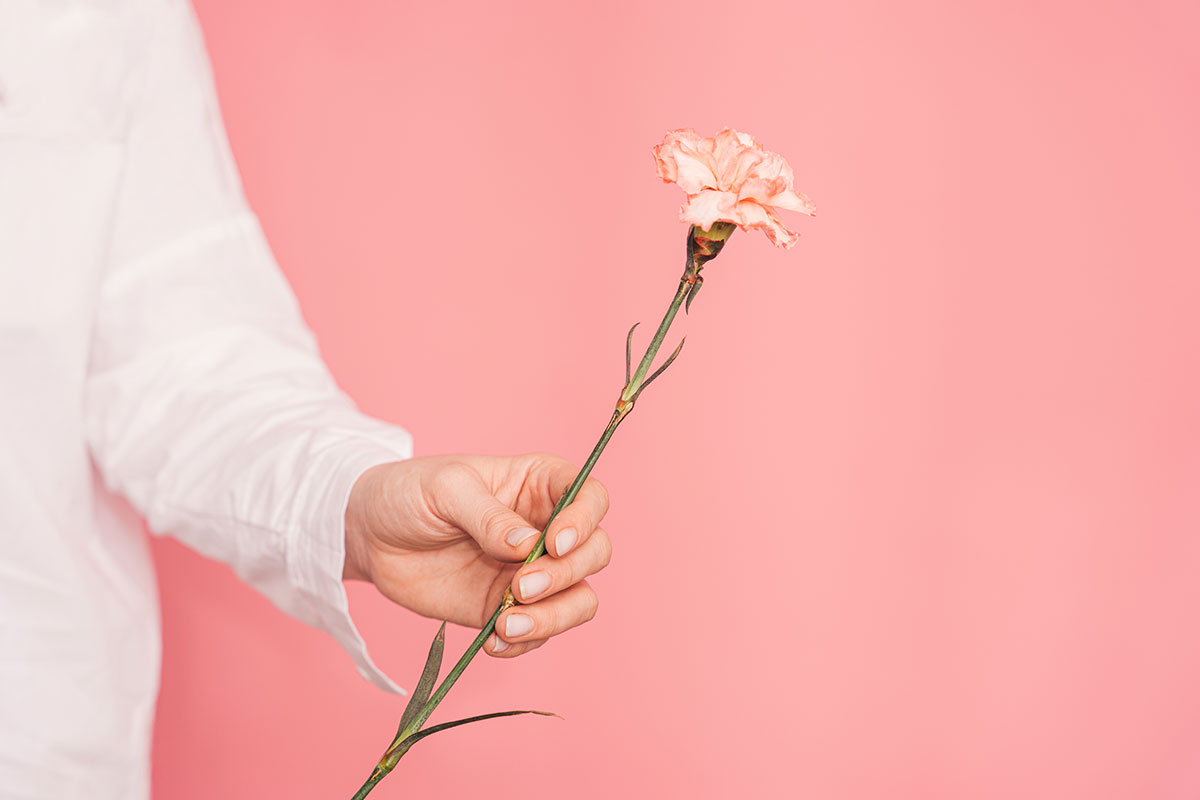
Science has long known that a vase of fresh blooms lifts the mood. A smaller, stranger body of research asks what happens when the flowers are fake.
In 2015, a group of Japanese researchers asked a class of high school students to sit quietly and look at pansies. Some of the pansies were alive. Some were convincing silk replicas. The students wore sensors tracking their heart rhythms, and afterwards they filled in questionnaires about how they felt. The results were modest in scale but clear in direction: the real pansies calmed the students’ sympathetic nervous system, the body’s accelerator pedal for stress, while the artificial ones did not. The students also described the living flowers as more comfortable, more natural and more relaxing to look at (Igarashi et al., 2015).
It is a small experiment, and the authors would be the first to say so. But it sits at the centre of an unusually practical scientific question. Fresh flowers are expensive, perishable and, in hospitals and offices, often banned. Artificial ones are cheap, permanent and increasingly hard to tell from the real thing at arm’s length. If the pleasure we take in flowers is mostly visual, a good fake ought to do the job. If it isn’t, then something about aliveness is doing work we don’t fully understand.
What we already knew about real flowers
The case that living flowers affect us is well established, and it predates the artificial comparisons by some years. One of the earliest influential studies, from 2005, found that people who received a bouquet reliably produced what psychologists call a Duchenne smile, the involuntary, eye-crinkling kind that is hard to fake, and reported better moods days later (Haviland-Jones et al., 2005).
Since then the field has become more physiological. Office workers who spent a few minutes looking at unscented roses showed increased parasympathetic activity, the “rest and digest” branch of the nervous system, and said they felt more comfortable and relaxed (Ikei et al., 2014; Song et al., 2017). Patients recovering from abdominal surgery in rooms with flowering plants needed less pain medication, had lower blood pressure and heart rates, and reported less anxiety and fatigue than those in bare rooms (Park & Mattson, 2008; Park & Mattson, 2009). Women given a nature-contact routine at home, with fresh flowers as a central element, reported lower perceived stress and improved mood (Largo-Wight et al., 2024). Across peonies, hydrangeas, camellias and lilies, viewing studies tend to find the same cluster of effects: lower blood pressure or heart rate, more vigour, less tension (Zhao et al., 2019; Li et al., 2025; Ai et al., 2025).
None of this, however, tells you whether a silk peony would have done the same. Most of these studies compared flowers with no flowers. The authenticity question requires a different design.
The head-to-head experiments
Only a handful of studies have put real and artificial flowers directly against each other, and they share a family resemblance: small groups, short exposures, participants acting as their own controls. Within those limits, they agree.
The pansy study is the cleanest test of pure viewing (Igarashi et al., 2015). A 2022 Korean study extended the idea to flower arranging, a task that involves handling the material rather than just looking at it. Participants who worked with natural flowers showed greater physiological relaxation and larger drops in anxiety and depression scores than those who arranged artificial ones (Yang et al., 2022). An earlier study of transplanting work found that handling real flowering plants produced more comfort and more favourable autonomic responses than handling artificial equivalents (Lee et al., 2013). And brainwave recordings taken during simple lay activities with real versus artificial ornamental plants pointed the same way, with lower anxiety after the real-plant tasks (Hassan et al., 2019).
What makes this convergence worth taking seriously is that the studies don’t resemble each other much. Different countries, different ages (teenagers in one, adults in others), different flowers, different tasks: looking, arranging, repotting. Yet they land on the same basic result. Real flowers come out ahead on how relaxed people say they feel, and on at least some measures of what their bodies are doing.
But the fakes are not nothing
Here the story gets more interesting, because the artificial flowers in these experiments do not simply fail. They underperform.
A 2024 study comparing natural and artificial plants found that negative emotions fell regardless of which material participants were given, and the authors concluded that artificial plants can serve as a psychological substitute where living ones are impractical (Park et al., 2024). Another study the same year recorded prefrontal brainwaves while people looked at live plants, artificial plants, photographs and 3D renderings. There were no significant overall differences between the four, though live plants were rated the most pleasant and natural, and, curiously, artificial plants were among the most calming stimuli for male participants (Kim et al., 2024).
The hospital literature tells a similar story. In a Dutch study of waiting rooms, both real plants and posters of plants reduced patient stress compared with a bare room, and a good part of that effect ran through something quite mundane: the room simply looked nicer (Beukeboom et al., 2012). When researchers asked patients and staff in oncology waiting areas, where live plants are often prohibited on infection-control grounds, most said they would prefer the real thing, but lifelike artificial greenery was widely accepted and rated clearly better than nothing. The paper’s title, taken from a participant, sums up the sentiment: “Artificial but better than nothing” (Blaschke et al., 2017).
So a reasonable reading of the evidence is this. Artificial flowers capture the aesthetic part of the benefit, the part that comes from a space feeling cared for and attractive. What they appear to miss is a second layer, one that seems to depend on the flowers being alive.
Why aliveness might matter
Nobody has fully isolated what that second layer consists of, but the surrounding research offers three plausible ingredients.
Scent. Even flowers we think of as barely fragrant release volatile compounds, and these have measurable effects. Sniffing fresh roses shifted autonomic activity towards relaxation in one study (Igarashi et al., 2014); tree peony scent altered mood and brain electrical activity in another (Zhao et al., 2019). Cut-flower fragrances produce distinct EEG signatures, though the direction, calming or energising, depends on the species (Wu et al., 2022; Jo et al., 2013; Lau et al., 2021). A silk flower has no volatile profile at all. Studies that combine smell and sight suggest the two channels together are more restorative than either alone (Bu et al., 2025; Zhang et al., 2023).
Perceived naturalness. Across the comparison studies, “natural” is one of the ratings on which real flowers most consistently win, and it tracks the relaxation scores. Our judgement that something is alive seems to shape how our bodies respond to it, independent of how it looks. This is also the field’s most awkward confound: participants can usually tell which flowers are real, so some of the advantage may be expectation rather than biology (Igarashi et al., 2015; Bringslimark et al., 2009). Few studies have tried to separate the two (Pei et al., 2025).
Colour. This one cuts both ways, because it applies to fakes as much as to the real thing. Blue and white flowers are consistently rated the most relaxing; yellow, red and orange are more uplifting and energising (Zhang et al., 2022; Zhang et al., 2024; Xie et al., 2021; Li et al., 2012). During the COVID-19 lockdowns, people with flowers at home reported better physiological and psychological states, with colour shaping whether the effect was calming or cheering (Xie et al., 2021). Colour is purely visual, so it is the one lever artificial flowers can pull just as hard as living ones.
A note of caution, in both directions
It would be easy to over-read this literature. The direct comparisons are small, brief and drawn from narrow populations, mostly students and young adults in East Asian laboratories. Nobody has yet run a large, well-blinded field trial that puts real and artificial flowers in the same offices or wards for weeks and tracks what happens. And the broader research on indoor plants, as opposed to flowers specifically, is a useful corrective: several larger studies in real workplaces and study rooms have found weak or null effects on mood and performance, a sharp contrast with the tidy results of laboratory experiments (Thatcher et al., 2020; Van Den Bogerd et al., 2021). A critical review of the whole area concluded that the experimental evidence for indoor plants, while suggestive, is thinner and less consistent than its popular reputation (Bringslimark et al., 2009). Flowers in a lab for five minutes are not flowers on a desk for five months.
Equally, the claim that artificial flowers are equivalent to real ones has very little support. The studies that find small or no differences are outnumbered by those that find a gap, and even the sympathetic ones tend to show real flowers winning on pleasantness and naturalness (Kim et al., 2024; Jo et al., 2019).
The verdict
Put plainly: real flowers make people feel better than artificial flowers do, and the effect shows up not just in what people say but in their heart rhythms and brainwaves. The advantage is most visible in short-term relaxation, perceived calm, and reductions in anxiety. It most likely comes from the fact that a living flower is a multisensory object, seen, smelled, touched and recognised as alive, while a replica is mostly a visual one.
Artificial flowers, for their part, are not inert. They make rooms more attractive, and attractive rooms are measurably less stressful. In settings where fresh flowers are impossible, the evidence suggests they are, in that oncology patient’s phrase, better than nothing, and sometimes considerably better. What they offer is a thinner slice of the same experience. Reviews of biophilic design in healthcare reach much the same conclusion: simulated nature helps, direct contact with living nature helps more (Du et al., 2026; Gaekwad & Van Galen, 2023).
The most honest summary may be that we have discovered flowers are not purely decorative, without quite working out why. The pansies, it turns out, were asking a harder question than anyone expected.
References
Ai, L., Wang, H., Feng, Y., Li, T., Li, Z., Zou, M., & Zhang, Q. (2025). The healing power of Camellia japonica L.: how flower types influence urban residents’ physiological and psychological wellbeing. Frontiers in Psychology, 16. https://doi.org/10.3389/fpsyg.2025.1489859
Beukeboom, C. J., Langeveld, D., & Tanja-Dijkstra, K. (2012). Stress-reducing effects of real and artificial nature in a hospital waiting room. The Journal of Alternative and Complementary Medicine, 18, 329–333. https://doi.org/10.1089/acm.2011.0488
Blaschke, S., O’Callaghan, C., & Schofield, P. (2017). “Artificial but better than nothing.” HERD: Health Environments Research & Design Journal, 10, 51–60. https://doi.org/10.1177/1937586716677737
Bringslimark, T., Hartig, T., & Patil, G. (2009). The psychological benefits of indoor plants: A critical review of the experimental literature. Journal of Environmental Psychology, 29, 422–433. https://doi.org/10.1016/j.jenvp.2009.05.001
Bu, W., Zhang, X., Chen, H. N., Wang, Q., Sun, M., & Cai, Y. (2025). The physiological and emotional restorative effects of Oriental hybrids on stressed youth: An interactive smell and sight study. Applied Ecology and Environmental Research. https://doi.org/10.15666/aeer/2302_18311852
Du, Y., Xie, M., & Zou, Y. (2026). Biophilic design in hospital environments: a rapid review of nature-integrated strategies and patient outcomes. Frontiers in Public Health, 14. https://doi.org/10.3389/fpubh.2026.1786483
Gaekwad, J. S., & Van Galen, L. (2023). Potential risks and beneficial impacts of using indoor plants in the biophilic design of healthcare facilities: A scoping review. Building and Environment. https://doi.org/10.1016/j.buildenv.2023.110057
Hassan, A., Bing, C., & Tao, J. (2019). Brainwave measurements for lay activities with real and artificial ornamental plants. European Journal of Horticultural Science. https://doi.org/10.17660/ejhs.2019/84.4.1
Haviland-Jones, J., Rosario, H. H., Wilson, P., & McGuire, T. (2005). An environmental approach to positive emotion: Flowers. Evolutionary Psychology, 3. https://doi.org/10.1177/147470490500300109
Igarashi, M., Aga, M., Ikei, H., Namekawa, T., & Miyazaki, Y. (2015). Physiological and psychological effects on high school students of viewing real and artificial pansies. International Journal of Environmental Research and Public Health, 12, 2521–2531. https://doi.org/10.3390/ijerph120302521
Igarashi, M., Song, C., Ikei, H., Ohira, T., & Miyazaki, Y. (2014). Effect of olfactory stimulation by fresh rose flowers on autonomic nervous activity. The Journal of Alternative and Complementary Medicine, 20, 727–731. https://doi.org/10.1089/acm.2014.0029
Ikei, H., Komatsu, M., Song, C., Himoro, E., & Miyazaki, Y. (2014). The physiological and psychological relaxing effects of viewing rose flowers in office workers. Journal of Physiological Anthropology, 33, 6. https://doi.org/10.1186/1880-6805-33-6
Jo, H.-J., Rodiek, S. D., Fujii, E., Miyazaki, Y., Park, B.-J., & Ann, S.-W. (2013). Physiological and psychological response to floral scent. HortScience, 48, 82–88. https://doi.org/10.21273/hortsci.48.1.82
Jo, H.-J., Song, C., & Miyazaki, Y. (2019). Physiological benefits of viewing nature: A systematic review of indoor experiments. International Journal of Environmental Research and Public Health, 16. https://doi.org/10.3390/ijerph16234739
Kim, S.-H., Lee, C. H., & Park, S.-A. (2024). Brain wave changes in the prefrontal cortex when exposed to varying plant types as visual stimuli. HortScience. https://doi.org/10.21273/hortsci17962-24
Largo-Wight, E., Kusomoto, H., Binder, M., Wludyka, P., & Hooper, S. (2024). Indoor nature contact: The efficacy of a nature contact intervention inside the home on perceived stress and mood among women. Ecopsychology, 16, 261–275. https://doi.org/10.1089/eco.2023.0073
Lau, K.-M., Su, W.-S., Chien, S.-C., Wang, S.-Y., & Kumar, K. S. J. (2021). Melia azedarach flowers and their volatile components improved human physiological and psychological functions. Journal of Essential Oil Bearing Plants, 24, 1200–1211. https://doi.org/10.1080/0972060x.2021.1978869
Lee, M.-S., Park, B.-J., Lee, J., Park, K.-T., Ku, J.-H., Lee, J.-W., Oh, K.-O., & Miyazaki, Y. (2013). Physiological relaxation induced by horticultural activity: transplanting work using flowering plants. Journal of Physiological Anthropology, 32, 15. https://doi.org/10.1186/1880-6805-32-15
Li, Q., Ou, X.-N., Cai, S.-Z., Guo, L., Zhou, X., Gong, X.-Q., Li, Y.-N., Zhai, Z., Elsadek, M. A., & Tang, H. (2025). A study on the restorative effects of hydrangea flower color and structure on human psychology and physiology. Horticulturae. https://doi.org/10.3390/horticulturae12010034
Li, X., Lu, Y.-Q., Zhang, Z., Wang, J., Pan, H., & Zhang, Q.-X. (2012). The visual effects of flower colors on university students’ psycho-physiological responses. Journal of Food, Agriculture & Environment.
Park, J., Kang, M.-J., Song, Y., Lee, Y., Kim, J., Jeong, S., & Lee, J. (2024). Comparison of the differences in psychological effects between artificial and natural plants. Journal of Environmental Science International. https://doi.org/10.5322/jesi.2024.33.1.103
Park, S.-H., & Mattson, R. (2008). Effects of flowering and foliage plants in hospital rooms on patients recovering from abdominal surgery. HortTechnology, 18, 563–568. https://doi.org/10.21273/horttech.18.4.563
Park, S.-H., & Mattson, R. (2009). Ornamental indoor plants in hospital rooms enhanced health outcomes of patients recovering from surgery. The Journal of Alternative and Complementary Medicine, 15, 975–980. https://doi.org/10.1089/acm.2009.0075
Pei, S., Qu, Y., Lu, J., Yao, L., & Zhang, N. (2025). Influence of subjects’ characteristics and cognitive factors on the perception of the odors from aromatic plants and physiological response. Building and Environment. https://doi.org/10.1016/j.buildenv.2025.112629
Song, C., Igarashi, M., Ikei, H., & Miyazaki, Y. (2017). Physiological effects of viewing fresh red roses. Complementary Therapies in Medicine, 35, 78–84. https://doi.org/10.1016/j.ctim.2017.10.001
Thatcher, A., Adamson, K., Bloch, L., & Kalantzis, A. (2020). Do indoor plants improve performance and well-being in offices? Divergent results from laboratory and field studies. Journal of Environmental Psychology, 71, 101487. https://doi.org/10.1016/j.jenvp.2020.101487
Van Den Bogerd, N., Dijkstra, S. C., Koole, S., Seidell, J., & Maas, J. (2021). Greening the room: A quasi-experimental study on the presence of potted plants in study rooms on mood, cognitive performance, and perceived environmental quality among university students. Journal of Environmental Psychology, 73, 101557. https://doi.org/10.1016/j.jenvp.2021.101557
Wu, Y.-T., Lee, A.-Y., Choi, N.-Y., & Park, S.-A. (2022). Psychophysiological responses of cut flower fragrances as an olfactory stimulation by measurement of electroencephalogram in adults. International Journal of Environmental Research and Public Health, 19. https://doi.org/10.3390/ijerph191811639
Xie, J., Liu, B.-Y., & Elsadek, M. A. (2021). How can flowers and their colors promote individuals’ physiological and psychological states during the COVID-19 lockdown? International Journal of Environmental Research and Public Health, 18. https://doi.org/10.3390/ijerph181910258
Yang, J.-W., Lee, M.-S., Joung, D., & Park, B.-J. (2022). Effects of using natural and artificial flowers in flower arrangement on psychological and physiological relaxation. Journal of People, Plants, and Environment. https://doi.org/10.11628/ksppe.2022.25.1.39
Zhang, L., Dempsey, N., & Cameron, R. (2022). Flowers – sunshine for the soul! How does floral colour influence preference, feelings of relaxation and positive up-lift? Urban Forestry & Urban Greening. https://doi.org/10.1016/j.ufug.2022.127795
Zhang, L., Dempsey, N., & Cameron, R. (2024). ‘Blossom Buddies’ – How do flower colour combinations affect emotional response and influence therapeutic landscape design? Landscape and Urban Planning. https://doi.org/10.1016/j.landurbplan.2024.105099
Zhang, X.-G., Guo, J., Zhang, X.-W., & Zhang, Q. (2023). Physiological effects of a garden plant smellscape from the perspective of perceptual interaction. International Journal of Environmental Research and Public Health, 20. https://doi.org/10.3390/ijerph20065004
Zhao, R., Zhang, G., Wang, X., Zhang, B.-T., Guo, L.-N., Niu, L.-X., & Zhang, Y.-L. (2019). Psycho-physiological effects of a peony-viewing program on middle-aged and elderly individuals at different phenological stages. International Journal of Environmental Research and Public Health, 16. https://doi.org/10.3390/ijerph16030439
Zhao, R., Zhang, G., Guo, L.-N., Zhang, B.-T., Niu, L.-X., & Zhang, Y.-L. (2019). The effects of olfactory stimulation by tree peony flowers on autonomic nervous system, emotional states, and brain electrical activity. Preprint. https://doi.org/10.21203/rs.2.17998/v1
 A warm welcome from The Artificial Flowers Company. We offer artificial flower arrangements, silk flowers, hanging baskets, topiary balls, topiary plants and much more - we hope you find what you're looking for!