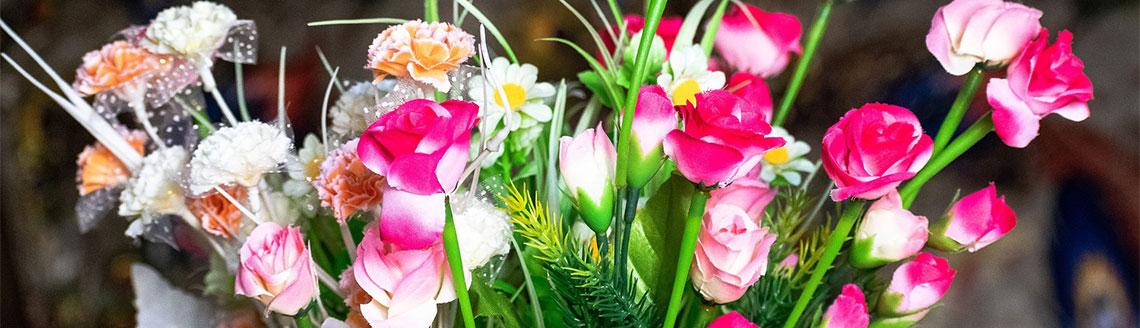
Artificial flowers are wonderfully low maintenance, but they aren’t completely immune to the effects of sunlight. If you’ve ever noticed a once-vibrant display looking a little tired and washed out, the culprit is almost always the sun. The good news is that with a few sensible precautions, you can keep your faux blooms looking fresh for far longer, even in bright, sunny spots.
In this guide we’ll explain why fading happens, share practical ways to slow it down, and help you understand when a display has simply reached the end of its life.
Why artificial flowers fade in the sun
Fading comes down to ultraviolet (UV) light. Most artificial flowers and plants are made from materials such as polyester, polyethylene and silk-effect fabrics, and the dyes and pigments used to colour them gradually break down when exposed to constant sunlight.
UV radiation slowly degrades the colour through a process of photo-oxidation, which causes pigments to bleach and surfaces to dull over time. The brighter and more direct the sunlight, the faster this tends to happen. South-facing windows, conservatories and sunny patios are the most demanding spots of all.
It’s worth remembering that fading is gradual. A display in a sunny room won’t change overnight, but over months and years the difference can become noticeable, particularly on the side that faces the light.
Think carefully about placement
Where you position your flowers is the single most important factor in preventing fading. Keeping silk flowers in constant, direct sunlight increases the chances of them losing their colour, so it’s wise to keep arrangements out of strong, direct light wherever you can.
That doesn’t mean you have to hide your flowers away in a dark corner. A few simple choices make a big difference:
- Position arrangements slightly back from the brightest windows rather than directly on the sill.
- Make use of net curtains, blinds or sheers to filter harsh midday light.
- On particularly bright days, draw the blinds or move a display temporarily if a room becomes a suntrap.
One of the lovely things about artificial flowers is their suitability for shaded areas where real plants would struggle, such as a dim hallway, a north-facing room or a windowless bathroom. These spots are perfect for faux arrangements, and they sidestep the fading problem entirely.
Rotate and move your displays
If your favourite spot for a bouquet happens to be a sunny one, all is not lost. Regularly rotating an arrangement means the sun’s exposure is spread evenly across the flowers rather than always hitting the same side.
Give a vase a quarter turn every week or two so no single face takes all the punishment. The same principle applies to larger pieces such as artificial topiary balls or topiary trees in bright rooms. For displays you can lift easily, occasionally moving them to a shadier spot for a spell will give them a rest from the light.
Choose paler colours for the brightest spots
Colour choice can work in your favour. Deep, saturated shades such as rich reds, purples and bright blues tend to show fading most obviously, because there’s further for the colour to fall. Paler tones, soft pastels, creams and whites are much more forgiving and often still look lovely even after some gentle fading.
So if you’re choosing silk flowers for a notoriously sunny windowsill or a conservatory, leaning towards lighter colours and natural greenery is a smart move. You’ll enjoy the display for longer before any change becomes noticeable. Save your boldest, most dramatic artificial flower arrangements for shadier rooms where their colour will stay true.
Keep your flowers clean
Dust may not seem connected to fading, but a layer of grime makes any arrangement look dull and tired, which can be mistaken for sun damage. Keeping faux flowers clean helps them look brighter for longer.
A gentle once-over now and again is all it takes:
- Use a soft duster or clean, dry cloth to wipe each bloom and leaf.
- A soft brush or a quick blast of a hairdryer on a cool setting can reach awkward crevices.
- For grubbier pieces, a wipe with lukewarm water and a little mild soap works well, though always avoid hot water.
What about UV protection sprays?
You can buy UV-resistant sprays designed to add a protective barrier to artificial flowers and plants, helping to block some of the harmful rays that cause fading. They can be a useful extra layer of defence, particularly for displays in very bright positions.
A few sensible cautions apply, though. Not every spray suits every material, and some products can mark or discolour delicate fabrics. If you decide to try one:
- Choose a spray specifically formulated for artificial flowers and plants.
- Always test it on a small, hidden area first and let it dry fully before judging the result.
- Apply it evenly in a well-ventilated space and follow the instructions on the can.
It’s worth being realistic about sprays. They sit on the surface and gradually wear away, so any protection they offer is temporary and needs reapplying, often every six to twelve months for outdoor pieces. For that reason, it’s best to use them as a supplement to good placement rather than a magic fix.
A word on outdoor displays
Outdoor settings are the most challenging of all, combining strong direct sun with rain, wind and temperature swings. Artificial hanging baskets, faux hedges and patio plants can look superb in the garden, but outdoor conditions will affect longevity and appearance over time.
If you’re decorating outside, a few practical steps help enormously: position pieces in partial shade where possible, use sheltered corners, porches or pergolas to reduce direct exposure, and secure larger arrangements firmly so they don’t blow over in gusty weather. Treat any outdoor display as something that may need refreshing sooner than an indoor one, and you won’t be disappointed.
Knowing when fading is beyond saving
However well you care for them, every display eventually reaches a point where the colour has genuinely gone. If flowers have turned chalky, brittle or noticeably patchy on one side, no amount of cleaning or spraying will bring the original colour back.
At that stage, the kindest thing is to retire the worst-affected stems and either replace them or repurpose them in a less prominent spot. The lovely thing about artificial flowers is that they last for years rather than days, so even faded ones have given you far more value than a fresh bouquet ever could. When the time comes, refreshing a few stems is usually all it takes to bring a whole arrangement back to life.
Final thoughts
Fading is the one real downside of putting artificial flowers in bright sunshine, but it’s very manageable. Keep arrangements out of relentless direct light, rotate and move them now and then, choose softer colours for the sunniest spots, dust them regularly and consider a UV spray for your most exposed displays.
With a little thought about placement and a few minutes of care here and there, your silk flowers, faux plants and topiary will stay beautiful, season after season, with none of the watering, wilting or mess of the real thing.
 A warm welcome from The Artificial Flowers Company. We offer artificial flower arrangements, silk flowers, hanging baskets, topiary balls, topiary plants and much more - we hope you find what you're looking for!